
Spa Day With Diamond: My Complete At-Home Dog Grooming Guide
Diamond, my blue harlequin Great Dane, had herself a spa day. I figured it was the perfect excuse to share the at-home dog grooming products, techniques, and tricks I've picked up over the years.
Between working as a professional dog trainer, breeding Great Danes, and running a household full of giant house ponies, I have spent a truly unreasonable amount of my life bathing dogs. Along the way I've learned that you don't need professional grooming equipment to get professional-looking results at home.
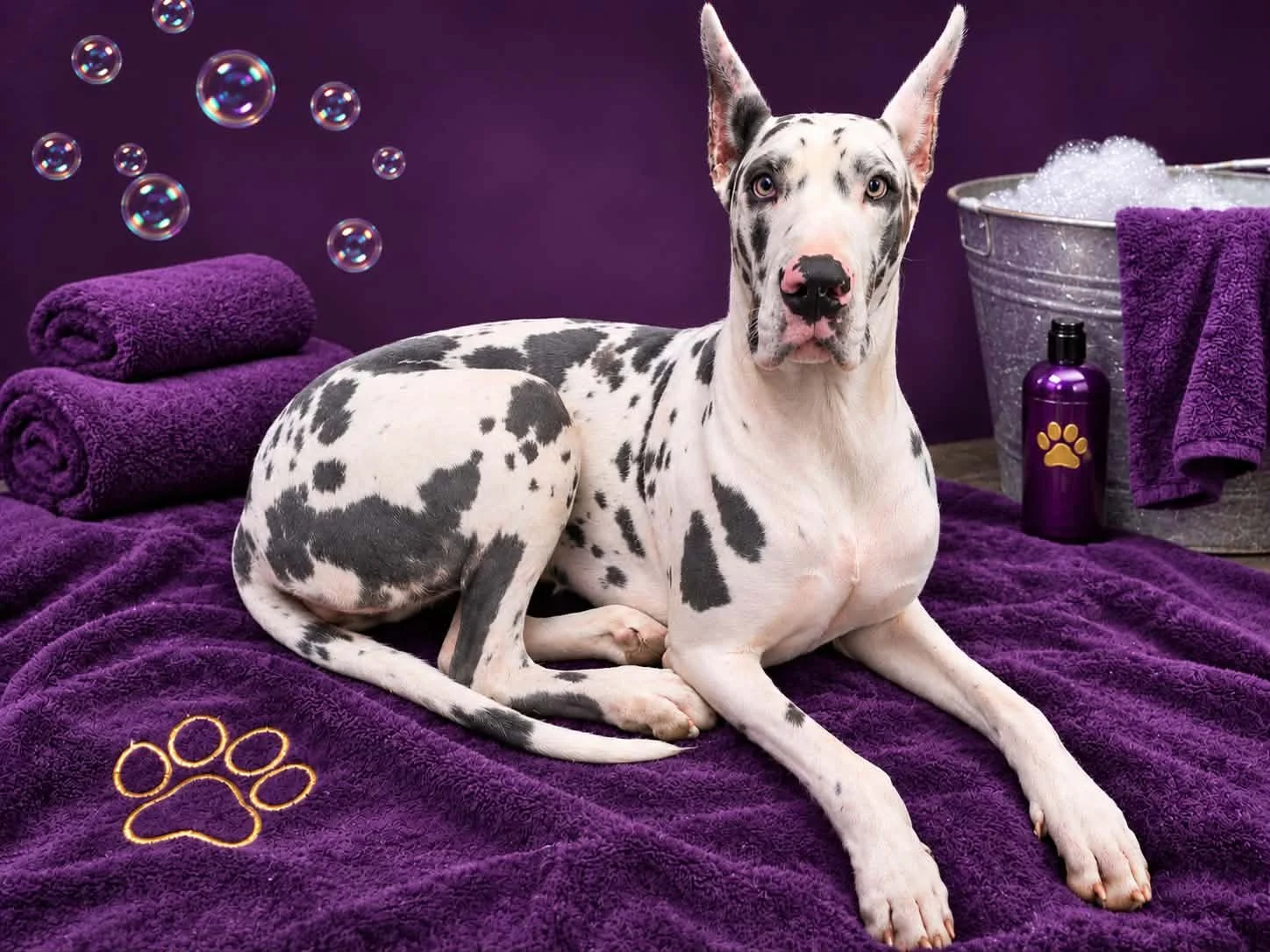
Here's my full routine: the products I actually use, where I save money, and the little tricks that make grooming a whole lot easier on you and your dog.
Setting Up Your Dog Bathing Area (No Grooming Tub Required)
I have a professional Flying Pig grooming tub, and I love it. You don't need one.
Bathing a dog outside
If you're bathing outdoors, one of my favorite purchases is the GroundWork 6-Pattern Pro Foam Wash Sprayer Nozzle from Tractor Supply.
It attaches to your garden hose and mixes the shampoo into the water as you spray. If you're bathing a large dog or one with a heavy coat, this is a game changer. Instead of stopping every thirty seconds to squeeze out more shampoo, you're working it through the coat as you go.
A kiddie pool helps contain the mess, especially with dogs who don't see the point of standing still. If you groom regularly, a sturdy elevated washing station will save your back.
And if you're grooming outside in Florida, find some shade. Nobody needs to be standing in the blazing sun wrestling a wet dog.
Bathing a dog in the tub or shower
In a regular bathtub or walk-in shower, a nonslip surface makes everything easier. Walk-in showers are especially handy for big dogs who have no interest in climbing over the side of a tub.
A dog shower attachment makes rinsing much easier than trying to maneuver a dog under a regular showerhead.
Dilution bottles save money
If you're not using a foam sprayer, get a shampoo and conditioner dilution mixing bottle.
Most professional grooming shampoos and conditioners are concentrated, so a little goes a long way. I mix only what I need for each dog. Buying concentrated and diluting it yourself saves real money, and you're not washing half a bottle of expensive shampoo down the drain.
Dress for the occasion
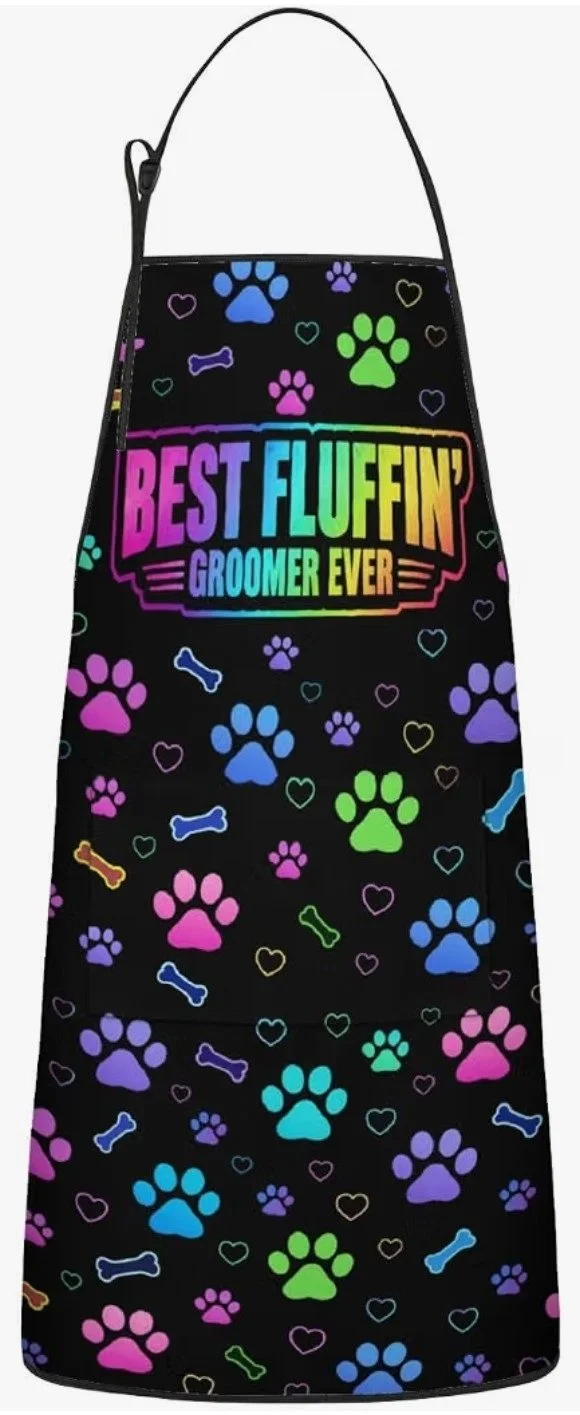
I wear a waterproof grooming smock so I don't end up completely soaked.
Mine says "Best Fluffin' Groomer Ever," because apparently even bath time needs a pep talk. If you've ever bathed a Great Dane, you know there's a good chance you're getting a bath right along with them. The smock improves those odds. It does not eliminate them.
Brushing Before a Bath: The Right Tool for Your Dog's Coat
Before any shampoo comes out, I remove as much loose hair, dirt, and debris as I can. The tool depends on the coat.
Short-coated dogs (like Great Danes)
A rubber curry brush is my go-to. It loosens dead hair and spreads natural oils without being rough on the skin.
The SleekEZ grooming tool is another favorite for pulling loose hair out of shorter coats.
Double-coated dogs (German Shepherds, Labradors, and friends)
For heavy double coats, I use a FURminator. It pulls out an impressive amount of undercoat. Once the loose hair stops coming out, stop going over that spot. More passes don't make the coat cleaner. They just start making your dog go bald.
I also keep a grooming rake handy for double coats, and I especially like it for working conditioner through the coat during the bath.
Sandspurs, burrs, and curly coats
If you've ever had to pick sandspurs out of a long or curly coat, you need a double-row flea comb. Picking those things out one at a time is how people lose their will to live.
I brush before the bath and again once the dog is completely dry.
Blowing Out the Coat Before Bathing
One of my favorite grooming tools is my Flying Pig forced-air dryer.
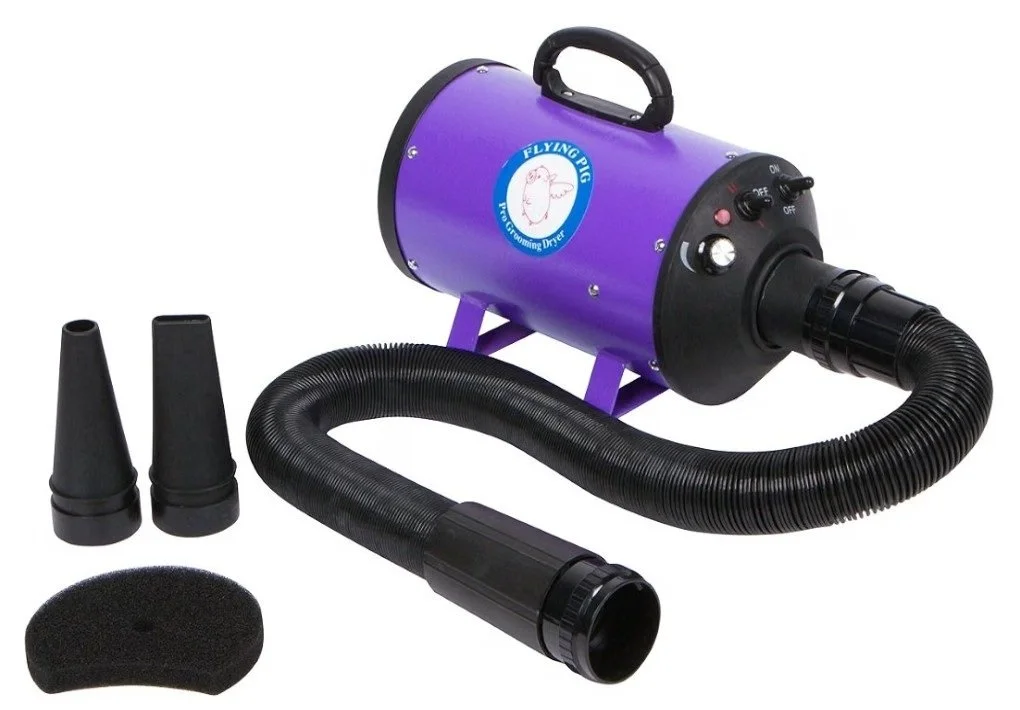
For heavy-coated dogs, I use the dryer before the bath to blow out loose undercoat, dirt, and debris. You would be amazed how much hair comes flying out before the dog is even wet.
Do this blowout outside, unless you enjoy finding dog hair on your walls, your furniture, and somehow inside your refrigerator.
The Flying Pig has a heat setting, which helps with drying heavier coats, and adjustable airflow, so it works for different breeds and coat types.
I use a Happy Hoodie during drying. It covers the ears and muffles some of the dryer noise. If your dog is afraid of the dryer, start on a low setting, away from the face, and work up from there.
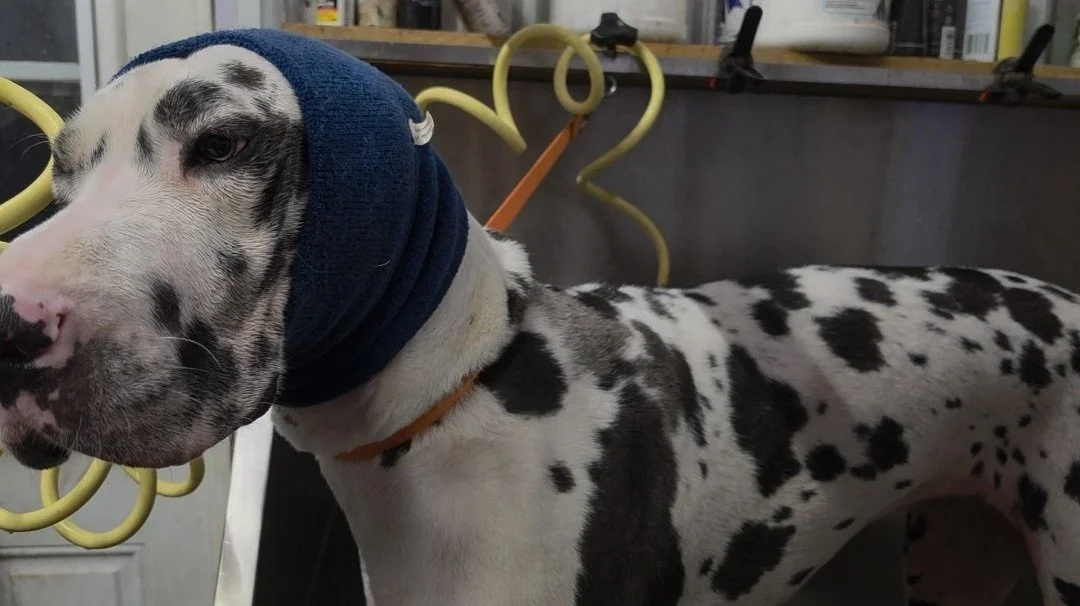
Diamond in her Happy Hoodie, looking exactly as thrilled as you'd expect.
How to Shampoo a Dog So They're Actually Clean
With the loose coat out, it's bath time.
I start by soaking the dog all the way down to the skin. This matters most with thick double coats: the outer coat can look drenched while the undercoat underneath is still bone dry. Part the hair and check.
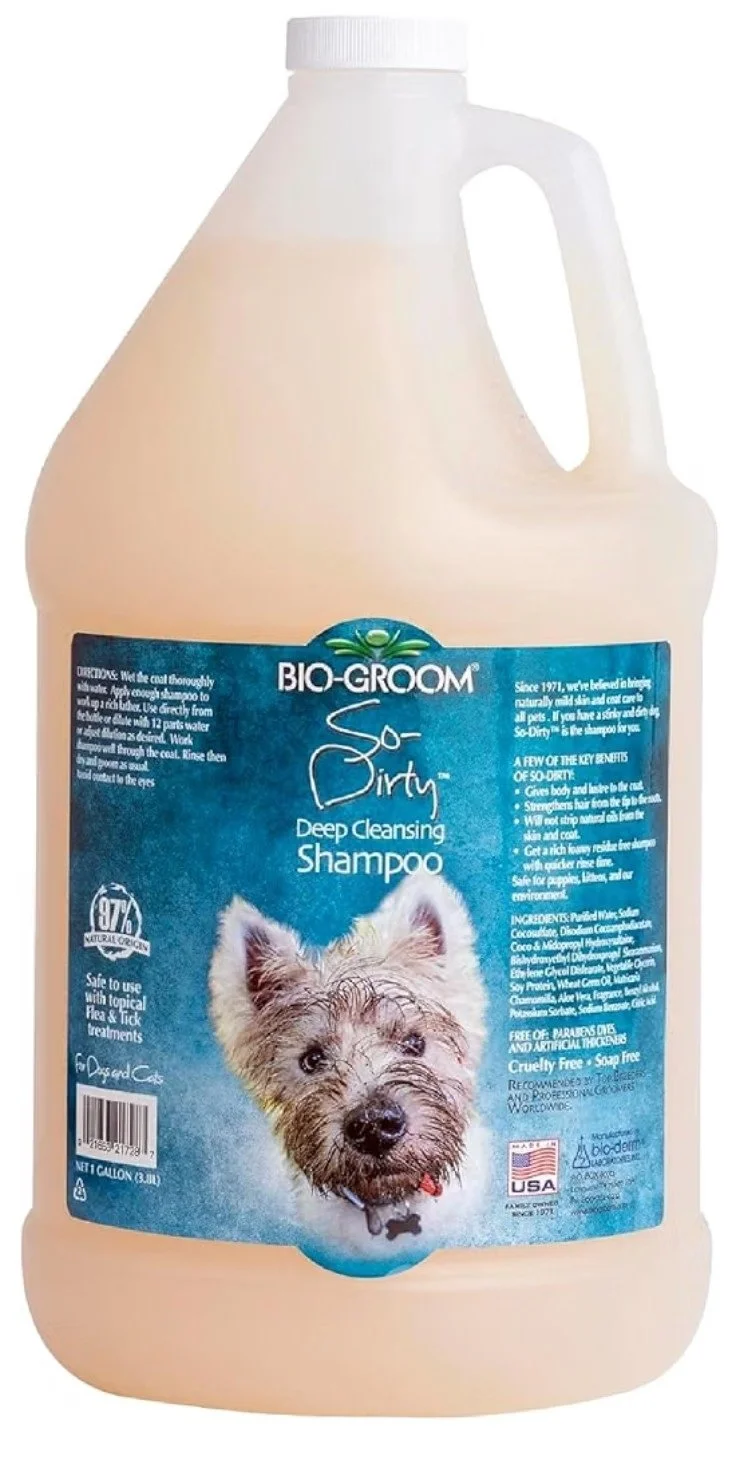
For general cleaning, I love Bio-Groom So-Dirty Deep Cleansing Shampoo. It's a deep-cleansing shampoo that does a great job on dirt, oil, and that mystery smell dogs occasionally come home wearing.
I buy it by the gallon, because with as many dogs as I have, the little bottles last about five minutes. The label says you can dilute it up to 12 parts water, so that gallon goes a lot further than it looks.
How to Wash a Dog's Face (Without Water Up the Nose)
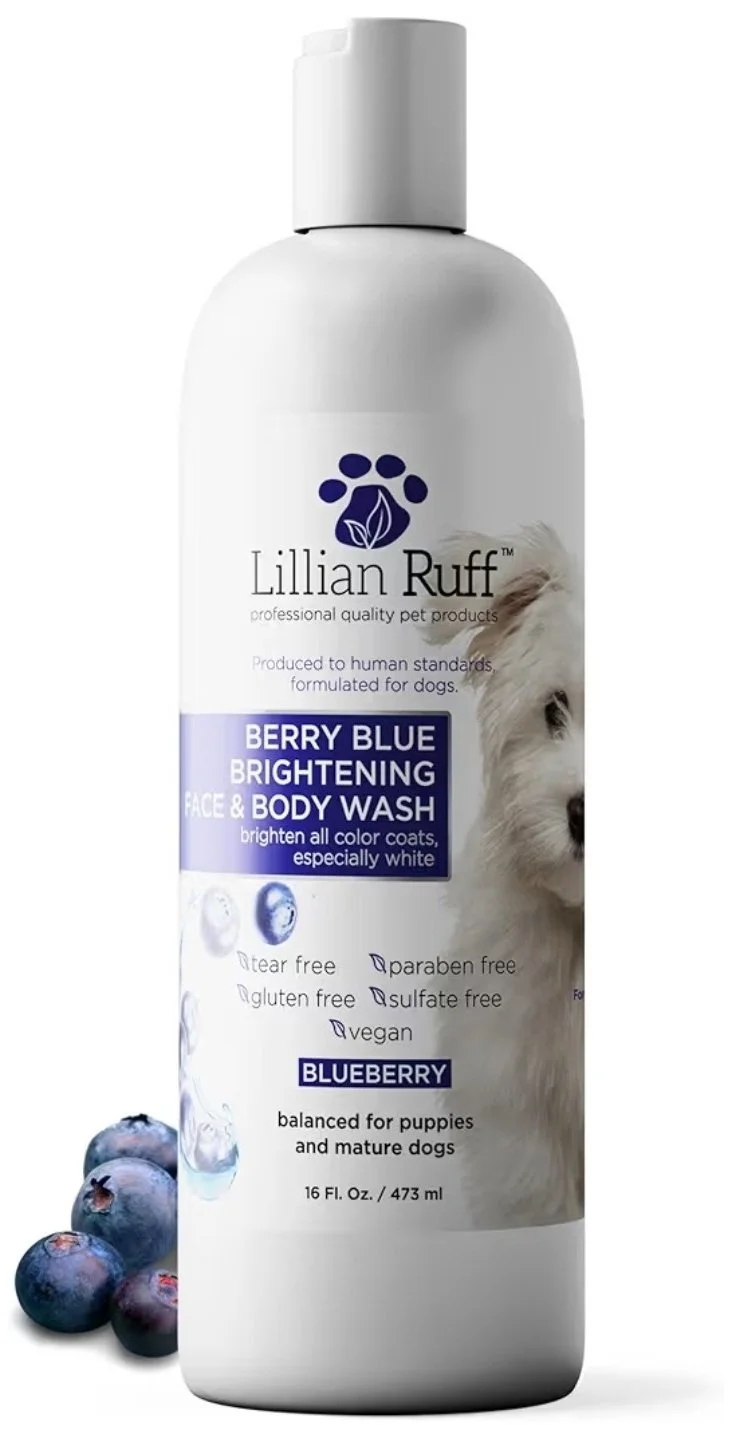
For faces, I use Lillian Ruff Berry Blue Brightening Face & Body Wash. It smells amazing and does a great job lightening stains around the mouth and eyes.
To rinse my Great Danes' faces, I switch the sprayer to its gentlest setting and press the nozzle right against the face. The nozzle is small compared with a Great Dane's head, so I can get water down to the skin without spraying it into their eyes and nose.
With my free hand, I fold the ears forward and closed and spray from the opposite direction to keep water out of the ears.
For smaller dogs or sensitive spots, a washcloth works just fine.
Dog Tear Stain Removal That Actually Works
Tear staining is common in certain breeds, and consistency makes a big difference.
One trick I use: contact lens solution designed to remove protein deposits. I put it on a cotton round and gently wipe the stained fur around the eyes. That's the fur, not the eyeball. For dogs with heavy staining, you may need to do this two or three times a day to stay ahead of it.
I've also had good results with Angels' Eyes, the oral tear-stain supplement you add to food. It can work very well, but I'm not a fan of using it continuously long term because of potential side effects. Also worth knowing: the older formulas contained an antibiotic, and the antibiotic-free versions sold today are a different product.
Choosing a Dog Shampoo for Skin Problems
Not every dog needs a specialty shampoo, but I keep a few on hand because skin problems are common, especially here in Florida.
Bacterial skin irritation
For minor abrasions or skin that looks like it has a bacterial issue, I may use a shampoo or wash with 2% chlorhexidine.
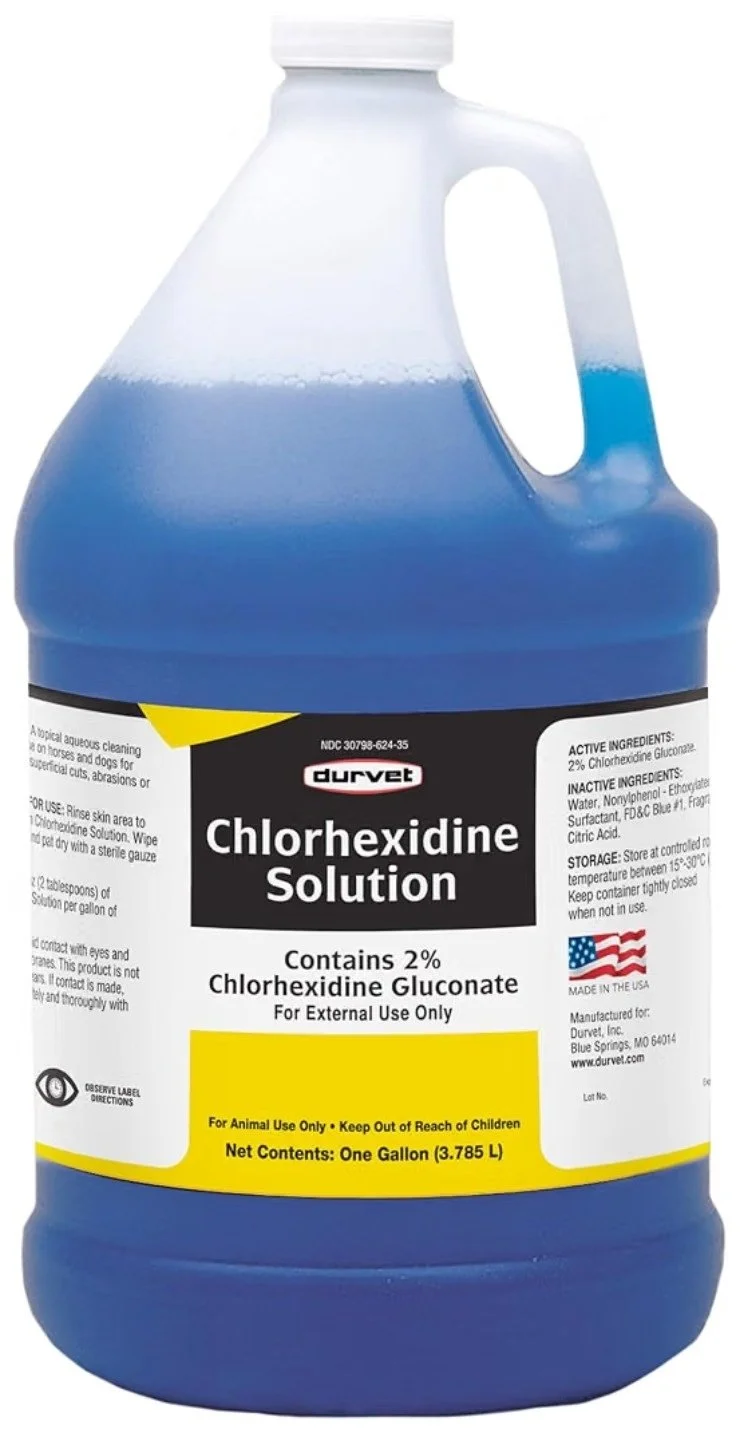
Why a whole gallon? You can get a prescription shampoo with chlorhexidine in it, but you'll pay about three times the price for a tiny little bottle. With the gallon, I can mix up my own chlorhexidine shampoo whenever I need it, and I always have it on standby to disinfect wounds. One jug, a lot of jobs, a fraction of the price.
What I look for: redness, inflamed skin, little pustules, crusty patches, itching, patchy hair loss, and odd smells.
Chlorhexidine is an antiseptic that reduces bacteria on the skin. When I'm working on those problems, I build it into the bath and give it some contact time before rinsing. It doesn't work if you rinse it off before it's had a chance to do anything.
Yeast on dog paws and other fungal skin problems
Yeast is something I see a lot in Florida's warm, humid climate.
The classic sign is that corn-chip or musty smell, especially around the paws. You may also see constant licking, greasy skin, redness, itching, or discoloration anywhere from bronze to dark brown or black. In chronic cases, the skin can turn thick and leathery.
Common problem areas: between the toes, around the ears, the armpits, the groin, and any skin fold where moisture hangs out.
For these, I like antifungal shampoos with miconazole or ketoconazole, sometimes combined with chlorhexidine.
The part people skip: drying. Getting the coat clean is only half the job. Between the toes, under the legs, and inside skin folds all need to be completely dry afterward, or you're just giving the yeast a nice warm bath.
Whitening shampoo for white dogs
Anyone with a white dog knows how fast that gorgeous white coat turns yellow, rusty, or some mysterious shade of beige. Saliva, tears, urine, and everyday dirt all contribute.
For whitening, I've used Cowboy Magic and Absorbine QuicSilver, both popular in the horse world. A brightening wash like the Lillian Ruff Berry Blue I mentioned earlier helps on stained areas too.
Some stains take repeated washing and steady maintenance, not one miracle bath. Unfortunately, dogs are not at all concerned with maintaining their expensive-looking white coats.
Conditioning and Deshedding a Double Coat
After shampooing, I use conditioner, especially on dogs with heavy coats or dry skin.
On double-coated breeds, a good deshedding conditioner makes a noticeable difference in how easily the undercoat lets go. I work it through with the grooming rake while it sits, which spreads the product and loosens dead hair before the rinse.
This is another place dilution bottles pay for themselves. Concentrated conditioner goes much further when you're not pouring it straight from the jug.
How to Dry a Dog (Don't Skip This Part)
Once the dog is rinsed, I start with a superabsorbent shammy or microfiber towel to pull out as much water as possible. These beat a mountain of regular bath towels by a mile.
Then the forced-air dryer comes out. Besides speeding things up, it removes more loose hair and leaves the coat with a nice finish. For double-coated dogs it's especially important, because towel drying alone can leave the undercoat damp for hours.
For dogs with skin issues, especially yeast, I'm extra careful about getting the skin completely dry. I finish with a pass of cooler air and double-check the paws, armpits, groin, and skin folds.
Once everything's dry, the coat gets one more brushing.
Finishing Touches for Skin and Coat
I keep Sulfodene Hot Spot & Itch Relief Spray on hand for minor itchy or irritated spots after the dog is clean and dry. It's a leave-on spray, so it's easy to give a problem spot some extra attention between baths. It contains benzethonium chloride, panthenol, aloe vera, witch hazel, and apple cider vinegar.
For dry, flaky skin, noses, and paw pads, I use a little coconut oil. I melt a small amount between my hands and massage it in. It doesn't take much, and the dogs are usually thrilled to lick whatever's left off my hands.
Apparently coconut oil is also an acceptable tip for the groomer.
How to Clean Dog Ears at Home
I clean ears after the bath because it's a good chance to remove any moisture or debris that's built up.
Dogs have an L-shaped ear canal, with a vertical section and a horizontal one. That's part of why ear cleaning looks intimidating if you've never done it.
Here's how I do it:
Apply ear cleaning solution into the canal when appropriate. For sensitive ears, I saturate a cotton round and clean around the opening instead.
Fold the ear over and massage the base with a good squishing motion to loosen debris.
Let the dog shake their head.
Wipe away whatever comes out with cotton rounds, and use a Q-tip only in the visible folds and crevices of the outer ear, where wax and dirt collect.
My recommendation? Do this outside, and keep your mouth shut. You only need to experience a dog launching ear gunk across the room once to appreciate that advice.
I like the Vet's Best Ear Cleaning Kit, which uses botanical ingredients. Because I go through so much ear cleaner, I also buy ZAP ear cleaner by the gallon. It's alcohol-free and works well for routine cleaning.
Occasionally I'll use a little witch hazel or isopropyl alcohol on a cotton round for stubborn buildup on the outer folds of the ear, as long as the skin isn't irritated or broken. To be clear: wiping the outer ear. Not pouring alcohol into the ear canal.
I also keep an ear-drying product around for lingering moisture.
While I'm in there, I watch for heavy wax, redness, odor, or unusual discharge. Ear cleaning is a built-in chance to notice when something isn't right.
Dog Nail Trimming: Clippers vs. Grinder
Nails are not something I let slide. Overgrown nails can change how a dog stands and moves, especially in large breeds, and they make it harder to get traction on slick floors.
For clipping, I use Miller's Forge nail clippers. Sturdy, simple, and they get the job done.
I also use a Dremel nail grinder to smooth rough edges and shorten nails gradually. For dogs with long foot hair, I pull a fishnet stocking over the paw and pop the nails through the holes. It keeps the hair from getting wound up in the grinder. The dog looks like they're headed to a costume party, but it works.
Sometimes I clip first and finish with the Dremel. When nails are already fairly short, I just use the grinder.
Regular maintenance makes the whole thing easier, especially with giant breeds whose nails can get pretty substantial.
Dog Dental Care at Home
Ideally, you'd brush your dog's teeth every day. I'll admit even I don't.
What I do: brush their teeth or give them something to chew, like chicken feet, at least weekly.
For brushing, I prefer an enzymatic toothpaste made for dogs. Virbac and TropiClean both make dental products, though I don't have a strong favorite. Finger brushes or dental wipes are handy for small dogs; for big dogs, a regular soft dog toothbrush works well.
I keep an eye on tartar, gum condition, and any changes in the teeth or breath. If tartar is building up, I've used a dental scraper, or I schedule a professional cleaning when it's needed.
The goal is to stay ahead of dental problems instead of waiting until the dog's mouth is a disaster.
How to Save Money on Dog Grooming
The biggest way I've cut grooming costs is buying in bulk. With multiple dogs, gallon jugs of shampoo, conditioner, and ear cleaner make a lot more sense than buying little bottles over and over.
Concentrated products are the real bargain, since you're diluting them instead of using them straight.
And you don't need a professional tub, a grooming table, or a salon's worth of equipment to do a good job at home. Start with a few quality products that suit your dog's coat and skin, and build from there.
Grooming Is a Health Check in Disguise
One of my favorite things about regular grooming is that it gives me a reason to really look at every dog.
I'm checking skin, looking between toes, examining ears, feeling for lumps and bumps, inspecting nails, and noticing changes I might otherwise miss. A lot of problems get caught in the bathtub before they'd ever get caught anywhere else.
And while I certainly enjoy seeing Diamond looking beautiful after a bath, there's something satisfying about knowing I've taken care of her coat, skin, nails, ears, and teeth.
Of course, the real challenge is seeing how long she stays clean before she finds something disgusting to roll in. My money is usually on about 20 minutes.
At-Home Dog Grooming FAQ
Should I brush my dog before or after a bath? Both. Brush before to remove loose hair and debris so shampoo can reach the skin, and again once the dog is completely dry to catch what the bath loosened.
How do I get a double-coated dog clean all the way to the skin? Blow out the loose undercoat first, then soak the dog thoroughly. The outer coat can look soaked while the undercoat is still dry, so part the hair and check.
How do I rinse my dog's face without getting water in the eyes and ears? Use the gentlest sprayer setting with the nozzle held against the face, and fold the ears forward and closed with your free hand. For small dogs, a washcloth works fine.
How do I clean my dog's ears at home? Apply ear cleaner (or wipe the opening with a saturated cotton round for sensitive ears), massage the base of the ear, let the dog shake, and wipe away debris. Use Q-tips only in the visible outer folds.
Should I use nail clippers or a grinder? Either works. I often clip first and finish with a grinder to smooth the edges. For nails that are already short, a grinder alone is enough.
How can I save money grooming my dog at home? Buy concentrated shampoos and conditioners by the gallon and dilute them yourself with a dilution bottle or foam sprayer.
Want help getting your dog comfortable with all of this? Join us for the next Sidekick Social Club on Saturday, December 19 at 10 AM, where we're covering how to lower stress for vet visits, nail trims, and grooming. It's $20 per person. Sign up on the Sidekick Social Club page under Group Classes.
Looking for a professional groomer for the holidays? I know some wonderful groomers here in Hernando County and I'm happy to recommend them. Just send me a message!
If your dog thinks bath time is a hostage situation, I can help with that too. Check out my in-home private training in Hernando County, or remote coaching from anywhere.
More from Must Love Dogs:
Some of the product links in this article are Amazon affiliate links. As an Amazon Associate, I earn from qualifying purchases at no additional cost to you.