

Great Dane Health Guide
A Breed-Aware Approach to Growth, Nutrition, Hormones, and Long-Term Health
Great Danes are not fragile dogs. They are giant dogs with giant physiology. Their size magnifies what is already true in canine biology: growth rate matters, hormones matter, inflammation matters, genetics matter, and daily management shapes long-term outcomes.
This guide is not written to scare anyone away from the breed. It is written to explain how to raise and maintain a Great Dane thoughtfully. We cannot control everything. Genetics are predetermined once a puppy is born. Environmental exposures cannot be eliminated completely. But nutrition, growth regulation, hormonal timing, structural awareness, and screening are variables we actively influence.
The goal is not perfection. The goal is probability management.
Growth: The Foundation of Structural Health
In Great Danes, growth is not just a phase. It is the single most important developmental window for lifelong orthopedic stability.
Many of the issues seen in giant breeds are not caused by deficiency. They are caused by excess — excess calories, excess weight, excess calcium, excess supplementation, excess acceleration.
A Great Dane puppy should grow steadily, not explosively.
I do not chronically restrict puppies. I allow them to eat freely when the food itself is appropriately formulated for giant breed growth. Dogs are generally excellent self-regulators when caloric density and mineral balance are correct. The problem is rarely appetite. The problem is composition.
If a food is excessively calorie-dense, growth accelerates even if the puppy appears to eat “normally.” If calcium and phosphorus are imbalanced, skeletal development can be disrupted regardless of volume consumed.
For giant breeds, I aim for a calcium-to-phosphorus ratio between 1:1 and 1.3:1. Excess calcium in Great Dane puppies has been demonstrated in controlled feeding trials to disrupt normal skeletal development. This is not theory. Mineral balance in giant breeds is non-negotiable.
General caloric starting points, adjusted by body condition rather than rigid math, fall roughly in these ranges:
8–12 weeks: approximately 20–25 kcal per pound per day
3–6 months: approximately 18–22 kcal per pound
6–12 months: approximately 15–18 kcal per pound
After maturity: adjusted to maintain lean condition
Lean is protective. I look for palpable ribs without pressure, a visible waist, and no chronic heaviness. Growth moderation is not starvation. It is structural stewardship.
Nutritional Standards & Research Foundation
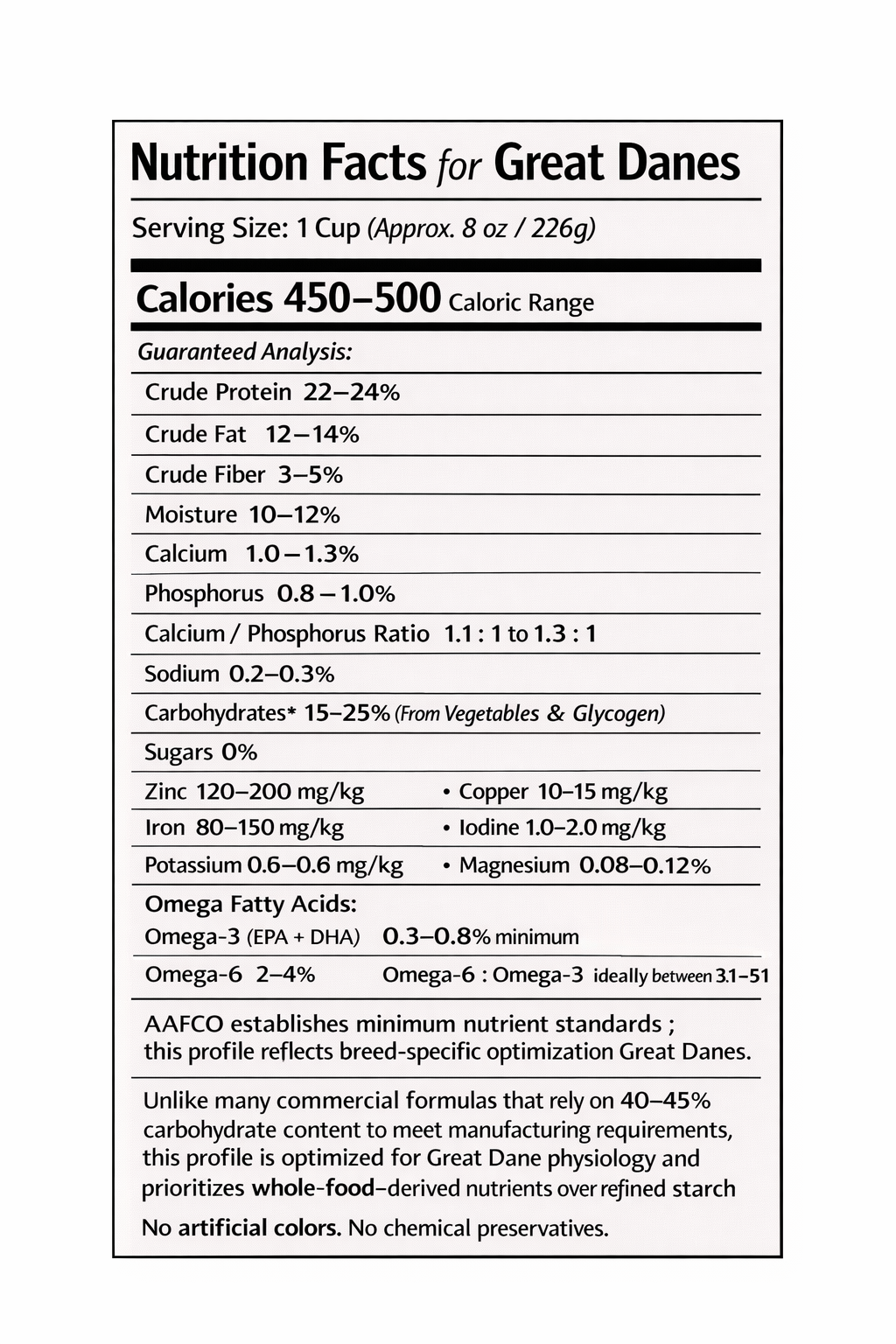
The nutrient targets outlined in the Great Dane Nutrition Profile above are not arbitrary. They are derived from established scientific guidelines and refined specifically for giant breed physiology.
AAFCO establishes minimum nutrient standards intended to prevent deficiency across the general dog population. These standards are essential, but they are baseline requirements. They are not breed-specific, and they do not account for the unique growth velocity, skeletal demands, and hormonal timeline of giant breeds such as the Great Dane.
The National Research Council (NRC) provides more detailed nutrient recommendations, including minimum requirements, recommended allowances, and safe upper limits expressed per kilogram and per 1,000 kilocalories. These values allow for more precise formulation and are particularly important when balancing minerals such as calcium, phosphorus, zinc, copper, and iodine.
Research conducted specifically in Great Danes and other giant breeds has demonstrated that excess dietary calcium during growth can disrupt skeletal development. These controlled feeding studies form the basis for maintaining calcium-to-phosphorus ratios within a narrow and carefully controlled range during puppyhood.
Energy density research in large-breed puppies further supports the importance of moderated caloric intake to prevent accelerated growth. Protein alone has not been shown to cause developmental orthopedic disease when mineral balance and caloric intake are properly controlled.
Omega-3 fatty acid research supports the inclusion of EPA and DHA for modulation of inflammatory pathways, joint support, and cardiovascular health. Maintaining a balanced omega-6 to omega-3 ratio helps reduce excessive inflammatory signaling.
Taurine and cardiac research, particularly in the context of diet-associated dilated cardiomyopathy investigations, highlight the importance of amino acid sufficiency in large and giant breeds.
Domestic dogs possess increased amylase gene copies compared to wolves, allowing them to digest starch more efficiently. However, evolutionary adaptation does not equate to optimal intake. While dogs can digest carbohydrates, there is no biological requirement for high-starch diets. For this reason, carbohydrate inclusion in this profile is moderate and derived from vegetable sources and glycogen rather than refined fillers.
For those preparing or supplementing home-based diets, tools such as BalanceIT allow for nutrient calculation aligned with NRC standards to ensure macro- and micronutrient adequacy.
This nutritional profile reflects breed-specific optimization informed by scientific research, not merely minimum survival standards.
Primary Resources Informing These Nutritional Targets
The nutrient ranges used in your Great Dane profile are informed by:
1. NRC (National Research Council) — Nutrient Requirements of Dogs and Cats (2006, updated reference values)
Provides evidence-based minimums, recommended allowances, and safe upper limits for macro- and micronutrients.
Expressed in mg/kg and per 1,000 kcal — more precise than AAFCO’s guaranteed analysis format.
2. AAFCO Dog Food Nutrient Profiles
Establishes minimum nutrient standards for growth and maintenance.
Designed as population-wide baselines, not breed-specific optimization.
Does not provide breed-specific or giant-breed–specific refinement.
3. Research on Calcium Excess in Giant Breeds
Controlled Great Dane feeding studies demonstrating that excess dietary calcium disrupts skeletal development.
Key research: Hazewinkel et al., Nap et al., Schoenmakers et al.
These studies form the basis for strict calcium-to-phosphorus control in giant breed puppies.
4. Large & Giant Breed Growth Research
Studies evaluating caloric density and growth velocity in large-breed puppies.
Emphasis on controlled energy intake rather than extreme protein restriction.
5. Omega-3 and Inflammation Research
Studies on EPA/DHA modulation of inflammatory pathways.
Research on omega-6 to omega-3 ratio and inflammatory load in dogs.
6. Cardiac Nutrition Research
Taurine and diet-associated cardiomyopathy discussions (FDA investigations 2018–2022).
Studies on taurine concentrations relative to carbohydrate-heavy formulations.
7. Amylase Gene Adaptation Research
Axelsson et al., 2013 — showing increased AMY2B gene copies in domestic dogs relative to wolves.
Supports that dogs can digest starch, but does not imply high-starch diets are biologically optimal.
8. BalanceIT Formulation Platform
Used for calculating and balancing home-prepared diets.
Aligns formulations with NRC guidelines.
Whole-Food Layering and Ingredient Standards
Commercial diets meet minimum AAFCO standards. Minimum standards are designed for population adequacy. They are not designed specifically for Great Danes.
Many commercial formulas, including breed-specific ones, rely heavily on corn, wheat, soy, gluten, by-product meals, rendered meat meals, added sugars, artificial dyes, and chemical preservatives. A significant percentage of commodity corn and soy crops are genetically modified and treated with glyphosate-based herbicides. Glyphosate has documented environmental and biological impact, including effects on microbial systems.
Beyond agricultural concerns, these ingredients often provide caloric bulk without the dense, bioavailable nutrient profile found in whole foods.
I do not rely solely on commercial diets. I layer whole foods intentionally because I believe whole-food supplementation improves outcomes beyond minimum AAFCO standards.
My approach includes thoughtful use of cod liver oil in appropriate doses, vitamin C, pre- and probiotics, fresh fish, eggs, organ meats, iodine-containing seafood in controlled amounts, and antioxidant-rich produce. This is not random supplementation. It is strategic.
Food is one of the only daily variables we truly control. We cannot change a pedigree after birth. We cannot eliminate environmental triggers entirely. But we can influence the biological terrain daily.
When evaluating a food, I encourage owners to call the manufacturer and ask for dry-matter calcium and phosphorus percentages, caloric density per kilogram, sodium levels, and taurine levels when relevant. Transparency matters.
Carpal Laxity Syndrome or knuckling in Puppies
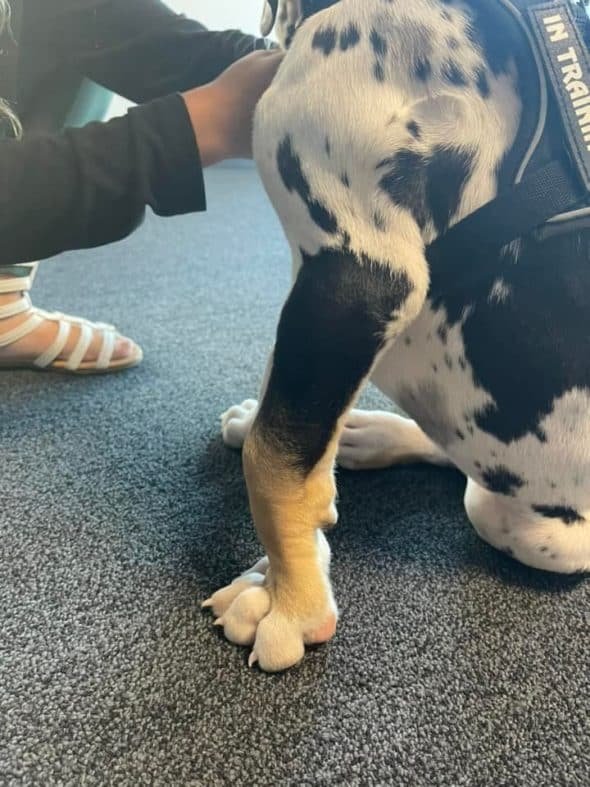
One of the most common early growth concerns in giant breed puppies is carpal laxity syndrome. Puppies may appear flat-footed, dropped at the wrists, or bowed in the front legs. It can look dramatic and alarming.
In many cases, it is not permanent deformity. It is growth imbalance.
Excess calories, mineral imbalance, over-supplementation, and inadequate traction contribute. When addressed early by correcting caloric density and mineral ratios and ensuring appropriate footing, many cases resolve completely.
More serious growth plate abnormalities such as angular limb deformities can occur, but they are far less common than temporary carpal weakness.
Hypertrophic Osteodystrophy (HOD)
HOD is a painful inflammatory bone condition seen in rapidly growing giant breed puppies. Symptoms include fever, lethargy, severe lameness, and swelling near the ends of long bones.
Historically, some breeders limited protein to approximately 22–24% and fat to around 14% to reduce risk. Research has shown that excess calories and excess calcium are more consistent contributors to developmental orthopedic disorders than protein alone when mineral balance is controlled. I remain cautious with energy density during growth, not because protein is inherently harmful, but because controlled growth protects structure.
Treatment of HOD often involves pain management and sometimes steroids. Steroids can reduce inflammation but also have systemic effects. Early veterinary involvement is essential. Holistic support may include nutritional correction and inflammation modulation, but it does not replace medical care.
Vaccination Timing, Rabies, and Titer Testing
Vaccination laws must be followed. That is non-negotiable.
However, stacking unnecessary vaccines, vaccinating during illness, or vaccinating during periods of high stress is avoidable.
Rabies vaccination is legally required in most areas. I prefer to time it thoughtfully within legal parameters and avoid combining it unnecessarily with other stressors. Adverse reactions are rare but documented.
I believe in titer testing to assess antibody levels before automatic revaccination. In specific medical cases, veterinarians may write medical exemptions.
Some owners explore homeopathic detox support after vaccination in certain situations. These are adjunctive measures, not replacements for medical standards.
This is not anti-vaccine ideology. It is individualized medicine.
Dilated Cardiomyopathy (DCM)
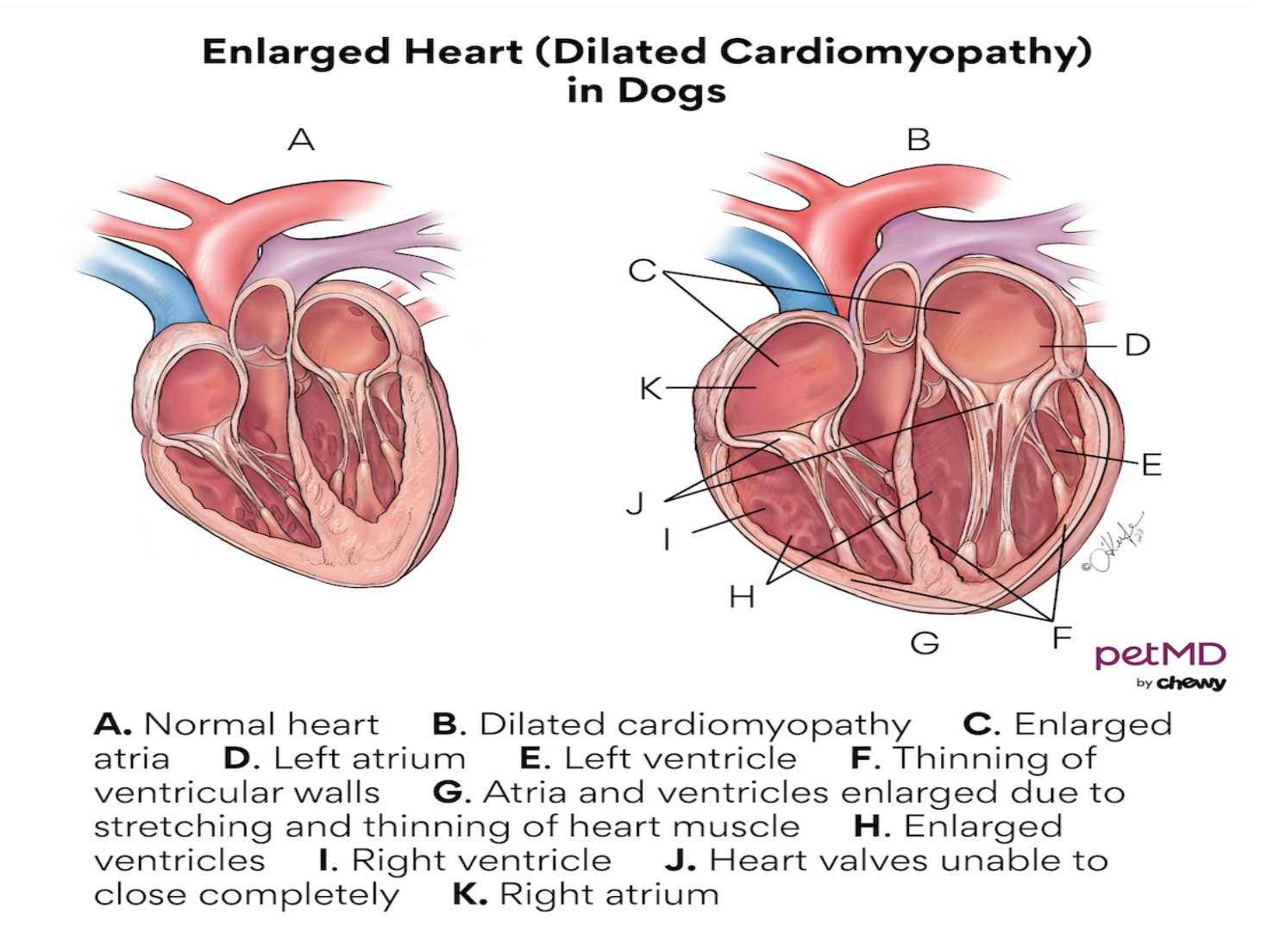
DCM is a disease in which the heart muscle weakens and enlarges, reducing pumping efficiency. It shortens lifespan in affected dogs and is particularly relevant in Great Danes.
Early signs may be subtle: exercise intolerance, mild fatigue, arrhythmias. As the disease progresses, coughing, difficulty breathing, fluid accumulation in the abdomen, collapse, pale gums, and cold extremities may develop. In advanced cases, poor circulation can contribute to hypothermia and shock.
Great Danes should undergo cardiac screening beginning around age two. Screening may include echocardiography, Holter monitoring, and OFA cardiac evaluations.
Lean body condition reduces cardiac strain. Age-appropriate exercise supports cardiovascular health. Regular monitoring is proactive, not reactive.
Thyroid Health
Autoimmune thyroiditis is seen in some Danes. Symptoms may include weight gain, lethargy, coat thinning, and behavioral changes including agitation or aggression.
A basic T4 is not sufficient. A full thyroid panel including thyroglobulin autoantibodies (TgAA) must be requested specifically. Many standard panels do not include antibody testing unless asked.
Thyroid function may also be affected by trauma or scar tissue around the neck. This is one reason I avoid choke chains and prefer tools such as properly fitted prong collars or head collars used correctly, which distribute pressure more safely.
Whole foods containing iodine, such as seafood, can support thyroid function when used appropriately.
OFA Eye Screening
OFA eye exams help identify inherited ocular conditions such as cataracts and progressive retinal changes.
Symptoms may include difficulty seeing in low light, hesitation on stairs, or behavioral shifts related to vision changes.
Antioxidant-rich whole foods and omega-3 fatty acids support ocular health, though screening remains the cornerstone of prevention.
Bloat (GDV)
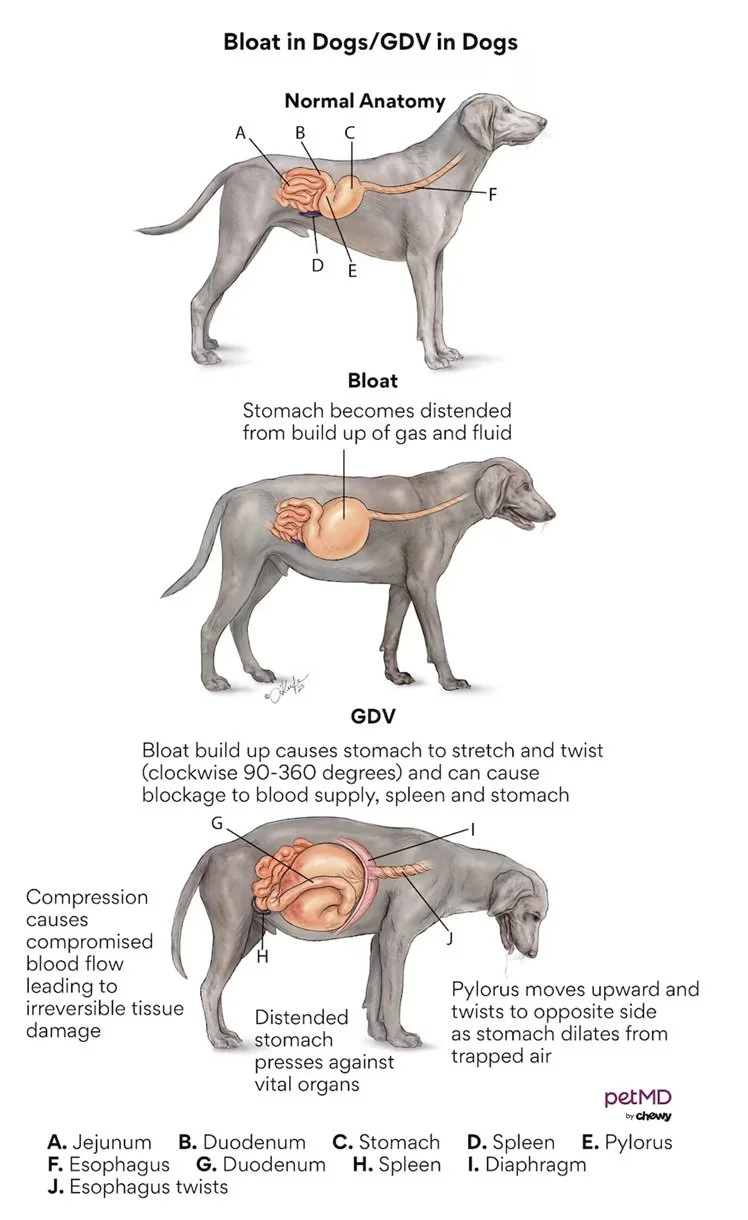
Bloat occurs when the stomach fills with gas. GDV occurs when that gas-filled stomach twists, cutting off blood supply to critical organs.
This is the emergency every Great Dane owner carries quietly in the back of their mind.
Symptoms include unproductive retching, abdominal distention, restlessness, drooling, pale gums, weakness, and collapse.
I personally keep simethicone available. Four standard 125 mg tablets equal 500 mg. It may reduce gas and buy time, but it does not correct a twisted stomach and does not replace emergency care.
Temperament matters. High-drive, high-arousal Danes that eat quickly, drink excessively, or struggle to regulate after excitement may carry higher risk. Genetics matter as well. If a pedigree consistently shows GDV, likelihood increases.
Gastropexy is a surgical procedure that tacks the stomach to the abdominal wall to prevent twisting. It does not prevent gastric dilation. It buys time. I believe it should be considered case-by-case, particularly in high-arousal dogs or in pedigrees with repeated GDV events. If elected, it should be performed after full maturity and in excellent health.
Osteosarcoma
Osteosarcoma is one of the most aggressive and painful cancers seen in giant breeds. It destroys bone internally, causing microfractures and severe pain.
This topic is personal. Watching a dog endure bone cancer is traumatic.
Symptoms include persistent lameness, swelling over bone, and pain on palpation. It is often initially mistaken for a soft tissue injury.
Treatment is individualized. Amputation may dramatically improve quality of life by removing the source of pain. In extra-large Danes, surgical decisions require careful consideration. Chemotherapy, palliative care, or combined approaches may be elected.
Chronic inflammation contributes to chronic disease. While no nutritional strategy cures osteosarcoma, I believe strongly in supporting the body through lean condition, whole-food nutrient density, omega-3 support, antioxidant intake, and microbiome health.
Fenbendazole has shown anti-cancer effects in laboratory cell studies, including canine osteosarcoma cell lines. Clinical evidence in live dogs remains limited. It is an area of interest, not a proven cure, and should be discussed with a veterinarian if considered.
Hormones and Spay/Neuter Timing
Sex hormones regulate more than reproduction. They influence growth plate closure, bone density, muscular development, and endocrine feedback systems.
After traditional spay or neuter, luteinizing hormone (LH) levels remain chronically elevated due to loss of gonadal feedback. LH receptors are present in tissues beyond reproductive organs. Research has explored correlations between altered hormonal environments and disease patterns in certain breeds.
In giant breeds that mature slowly, timing matters. I require waiting until at least 18 months before sterilization unless medically necessary. Hormone-sparing options such as vasectomy or ovary-sparing spay preserve endocrine function while preventing reproduction.
This is about physiology, not ideology.
Wobbler Syndrome
Wobbler syndrome involves cervical spinal cord compression. Symptoms include a wobbly gait, toe dragging, neck pain, and weakness.
Lean condition and responsible breeding reduce strain on developing structure. Treatment ranges from conservative management to surgical intervention depending on severity.
Hip and Elbow Dysplasia
Genetics heavily influence dysplasia risk. Symptoms include bunny hopping, stiffness, reluctance to jump, and front limb lameness in elbow involvement.
OFA testing of breeding stock, growth moderation, delayed sterilization until maturity, and lean condition support structural health.
Addison’s Disease
Addison’s disease involves adrenal hormone deficiency. Symptoms may be vague: lethargy, gastrointestinal upset, weakness, collapse during stress.
With proper diagnosis and treatment, dogs can live normal lives.
Great Danes are not fragile. They are powerful dogs whose physiology demands informed stewardship.
Responsible breeding. Thoughtful nutrition. Growth moderation. Hormone awareness. Regular screening.
Not fear.
Steady management.
This is the full long-form narrative version.
Final Thoughts: Raising Great Danes With Intention
Great Danes are not fragile dogs.
They are powerful, sensitive, intelligent animals whose size amplifies both strength and vulnerability. Their physiology requires awareness — not fear. Their growth requires moderation — not restriction. Their health requires intention — not overreaction.
No one can eliminate every risk. Genetics are predetermined once a puppy is born. Environmental exposures cannot be fully controlled. Life will always contain variables.
But we are not powerless.
We influence growth velocity.
We influence mineral balance.
We influence inflammatory load.
We influence hormonal timing.
We influence body condition.
We choose whether to screen proactively or react later.
Food is one of the only daily inputs we control. Exercise is another. Timing decisions — such as sterilization or vaccination scheduling — matter. Monitoring, testing, and knowing your pedigree matter.
This breed does not need panic. It needs stewardship.
When Great Danes are bred thoughtfully, grown carefully, fed intentionally, kept lean, hormonally supported through maturity, and monitored appropriately, they are remarkably resilient dogs.
The goal is not to eliminate every possibility.
The goal is to shift probability in your favor.
That is responsible ownership.
That is how you raise Great Danes well.