
Puppy Biting and Kids: Raising Best Friends Instead of Tiny Sharks
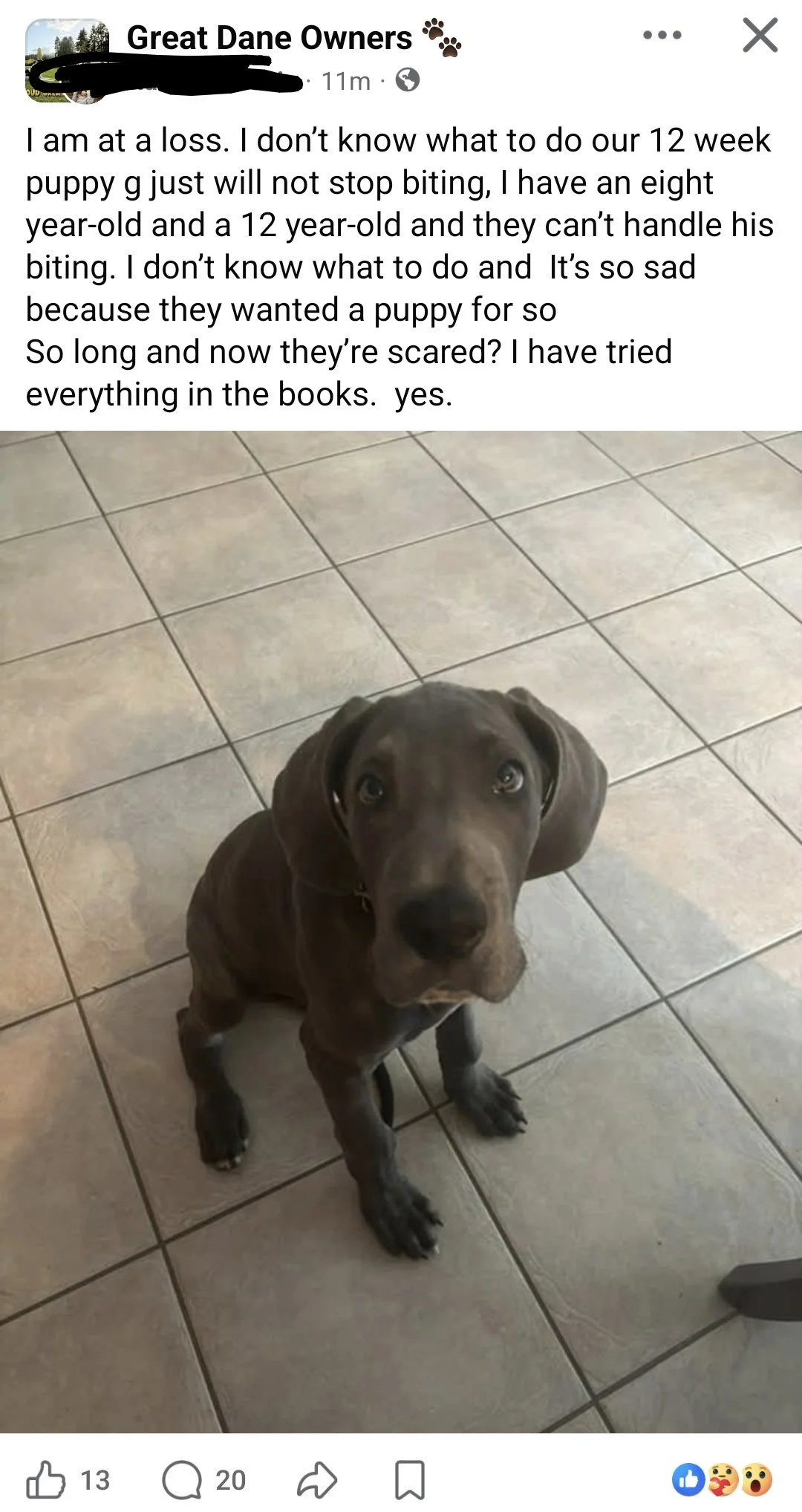
One of the most common calls I get from families goes something like this:
"Our puppy won't stop biting the kids."
Usually the puppy is somewhere between 10 weeks and 5 months old, the kids are frustrated, the parents are exhausted, and everyone is wondering if they accidentally brought home a tiny alligator instead of the sweet puppy they picked out.
Why Puppies Bite in the First Place
The good news is that puppy biting is completely normal. Puppies explore the world with their mouths. They play with their mouths. Then, around four months of age, they start cutting their adult teeth, and suddenly they want to chew on absolutely everything because their mouths are uncomfortable. Most puppies are finished teething somewhere around six to seven months of age, but that doesn't mean you have to spend those months being everyone's favorite chew toy.
The biggest mistake I see families make is giving a young puppy too much freedom too soon. Before you know it, you're chasing them around the living room yelling, "No!" as they continue launching themselves at the nearest pant leg like it's an Olympic event.
Start With Management, Not Chasing
Put a leash on the puppy.
Ta-da.
Now you can actually manage the situation.
I'm a big fan of using a simple slip lead around the house because it gives you a way to interrupt bad decisions before they become a really fun game. Instead of grabbing at your puppy's collar, chasing them through the house, or turning the whole thing into a wrestling match, you simply guide them away and redirect them.
Recommended slip leads:
Small puppies: https://amzn.to/4AxcfK4
Large puppies: https://amzn.to/3V3pkKQ
Give Kids a Job Instead of a List of Don'ts- Pretty soon the kids aren't having much fun either.
Instead, give them jobs. Kids love feeling like they're helping, and there are plenty of safe ways for them to participate in training without becoming the puppy's favorite chew toy.
One of my favorite exercises is a tandem walk. The adult holds one leash and the child holds another. The adult is still completely in control, but the child feels like they're participating. They're learning how to read the puppy, they're learning leash handling skills, and they're building a relationship with the dog from day one.
If your child tends to get a little wild with the leash — jerking it around, swinging it, forgetting they're holding it at all — clip their leash to a harness instead of the puppy's collar. That way an enthusiastic kid moment doesn't turn into pressure on the puppy's neck.
Another favorite is a flirt pole.
Yeah... it's actually called a flirt pole. I didn't make it up. Google it. I can't guarantee what else might come up, but I promise it's a real dog toy. Think giant cat wand... you know the one with the feathery thing on the end? Except built for dogs.
I actually like replacing the toy that comes with most flirt poles with a fleece tug that has a squeaker. Puppies tend to stay engaged longer, and because the toy is at the end of a long pole, little fingers stay well out of the bite zone.
A flirt pole is also a fantastic way to teach "Take It," "Drop It," and "Leave It." The puppy still gets to chase, bite, and satisfy those natural instincts, but they're learning there are rules to the game.
Like everything else on this list, a flirt pole needs to be a supervised activity. Kids get excited, poles swing, and it doesn't take much for an enthusiastic kid to accidentally smack a puppy across the head instead of leading them into a chase. You can also practice trading a treat for the toy once the puppy catches it — a great way to build "Drop It" without a fight over the tug — but that trade should be supervised too, especially early on, until you know how your puppy handles that exchange.
Have everyone spread out around the room or yard. One person calls the puppy, rewards them, then another person calls the puppy and rewards them. The puppy thinks they're playing the greatest game ever invented while the family is secretly building an awesome recall.
Hide and Seek works the same way.
Have your child hide behind a couch, around a corner, or behind a tree while another adult gently holds the puppy. Once they're hidden, tell the puppy to "Find them!" Kids can also hide treats or toys around the room while the puppy uses their nose to search. It's mentally tiring, builds confidence, and gives the child a fun way to participate that doesn't involve wrestling with the puppy.
When the Biting Gets Worse, Check the Nap Schedule
Speaking of being tired...
Puppies are a lot like toddlers. They get overtired, overstimulated, and downright cranky. One of the first things I notice when a puppy needs a nap is that the biting gets worse. If your puppy suddenly turns into a tiny velociraptor around dinner time, they probably don't need another walk. They need some sleep.
When my puppy bites, I say "No," give a leash correction, and immediately redirect them to something they're allowed to chew. If we've gone through that routine three times and they're still convinced my arm tastes better than the toy, it's three strikes and you're out.
I calmly guide them to the crate with an appropriate chew and let them settle down.
The crate isn't punishment.
It's management.
For most puppies, that combination of interruption, redirection, and a calm reset in the crate is enough to get through the teething phase without anyone losing a chunk of skin. For the more intense biters — the ones who seem to escalate instead of settle, or don't respond to that pattern at all — there's more to it than what fits in a blog post. That's usually where a session or two makes the difference between managing it and actually fixing it.
Sometimes puppies simply need help making better decisions.
During teething, I like to have lots of different options available. Different textures, different smells, frozen chews, puzzle toys — anything that gives the puppy an appropriate outlet for chewing.
One of my favorites is the West Paw Toppl.
I'll fill it with kibble, small training treats, pumpkin, goat milk, plain yogurt, carrots, celery... whatever I've got that's dog-safe. Freeze it, hand it to the puppy, and everyone gets a little break.
The Toppl is designed as a puzzle toy. You can fill one with kibble or small treats and let your puppy work to get the food to fall out through the opening, or freeze it to make it last much longer. If you really want to increase the challenge, two different-sized Toppls lock together to create an entirely different puzzle.
If puppy biting has taken over your household and you're ready for a plan that actually makes sense, I'd be happy to help. Every puppy and every family is different, and sometimes a few small changes make all the difference.
Ready to get started? Schedule a consultation here.
Products Mentioned
Slip Lead – Small Puppies: https://amzn.to/4AxcfK4
Slip Lead – Large Puppies: https://amzn.to/3V3pkKQ
Flirt Pole: https://amzn.to/3VtKQs9
Replacement Fleece Tug: https://amzn.to/3V7WZmD
West Paw Toppl: https://amzn.to/3T1inJH
As an Amazon Associate, I may earn a small commission from qualifying purchases at no extra cost to you. Thanks for supporting my content.