
The Rabies Vaccine: The Good, The Bad, and The Ugly
Most owners have exactly one interaction with the rabies vaccine - sign the consent form, pay the bill, go home. Nobody hands you the fine print. This is the fine print.
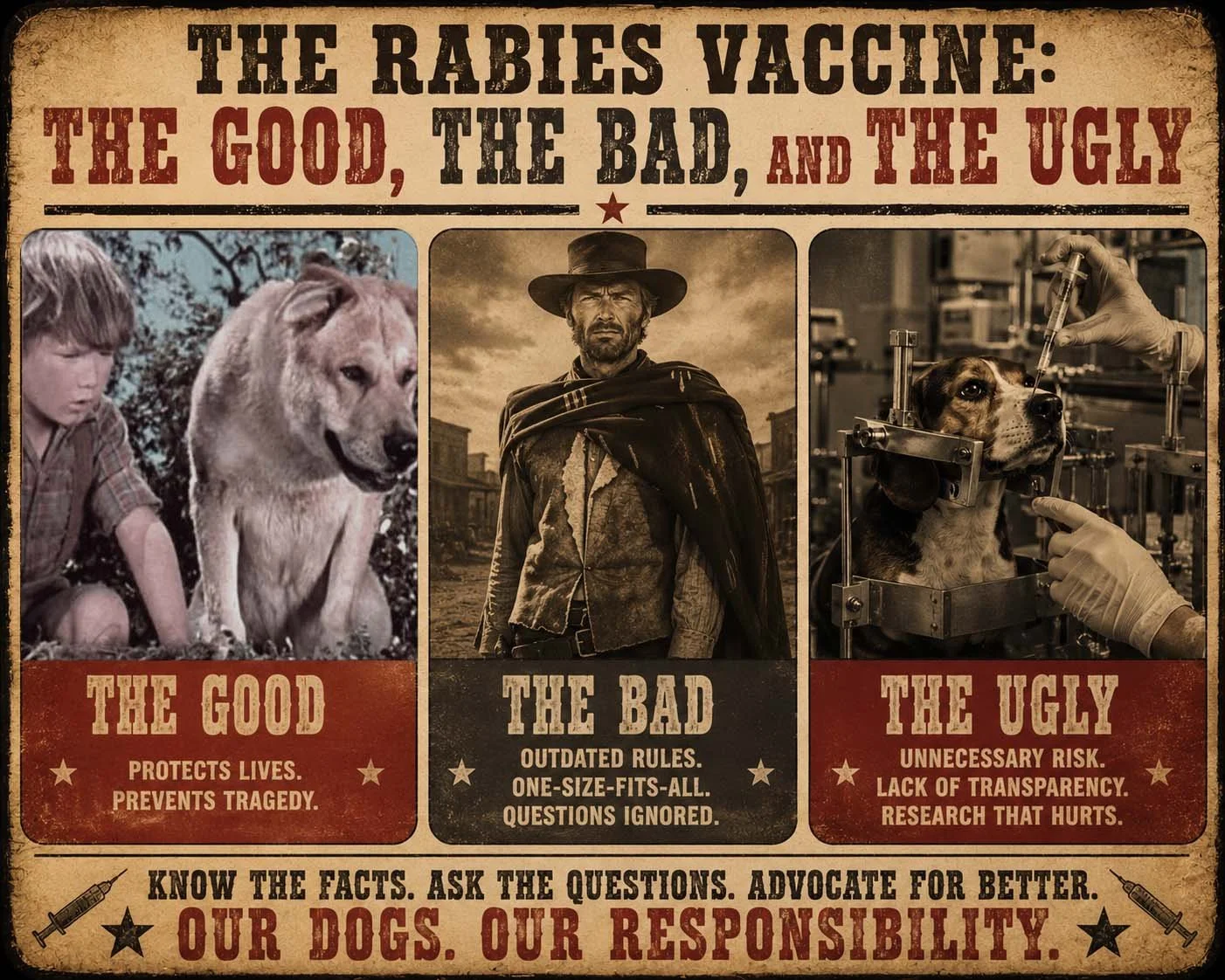
I want to say up front: this isn't an anti-vaccine article, and it isn't a "just trust your vet and don't ask questions" article either. It's the article I wish existed the first time I stood in an exam room with one of my own dogs and realized I didn't know why the vaccine bottle said three years but I'd been called back in at one. I'm not a veterinarian. I'm a dog trainer with a background in veterinary technology, and people trust my opinion on their dogs' care, so that gap bothered me enough to go dig through the studies myself. I didn't realize how many questions I had, or how many vaccine variations even existed, until I started looking. Now I can finally have an informed conversation with my vet instead of just nodding along and signing.
Rabies vaccination is required by law in Florida, and the disease it prevents is close to always fatal once symptoms start. Those are facts, not opinions, and you'll find the reasoning behind both throughout this guide. What I'm not going to do is tell you how to feel about any of it. Understanding the law, the science, and where the gray areas are doesn't make you a skeptic. It makes you the kind of owner who walks into that exam room ready, instead of just signing where you're told.
So let's get into it. All of it, in plain English.
What Rabies Actually Is, and Why It's Not Like Your Dog's Other Vaccines
Most of the vaccines your dog gets protect against diseases that are dangerous but survivable, treatable, or at least not a guaranteed death sentence. Rabies is different on every count.
Rabies is a virus that attacks the brain and spinal cord, basically your dog's whole nervous system, the wiring that runs everything. It spreads almost exclusively through the saliva of an infected animal, usually through a bite, though it can also get in through a scratch, an open wound, or if infected saliva touches the eyes, nose, or mouth (CDC). Once the virus is in the body, it travels along the nerves toward the brain, kind of like it's climbing up a wire toward the control panel. That trip, called the incubation period, can take anywhere from days to months, depending on where the bite happened and how far the virus has to travel to reach the brain (CDC).
Rabies is different from basically every other disease your vet vaccinates against; once symptoms show up, it's essentially always fatal. The World Health Organization puts it just that plainly. There's no cure once the virus reaches the brain and symptoms begin. Human survival does happen, but it's exceptionally rare; the most recent careful academic review puts the number at roughly 34 well-documented survivors worldwide, most left with lasting neurological damage. The case that started it all was a 15-year-old Wisconsin girl named Jeanna Giese, bitten by a bat in 2004. Doctors put her into an induced coma and gave her antiviral drugs, essentially buying her immune system time to fight the virus off before it could do fatal damage, an approach that became known as the Milwaukee protocol. She survived and is alive today. The catch; doctors have tried that same protocol dozens more times since, and it hasn't reliably worked again, to the point that a 2025 medical review called for it to be abandoned as a treatment. Good critical care, not the specific drug combination, was probably what mattered most in her case. The numbers here depend on who's counting. Dr. Rodney Willoughby, the doctor who developed the protocol and has spent two decades promoting it, has said there are 45 known survivors total, 18 of them credited to his method. The independent academic review that called for the protocol's retirement counted only 34 well-documented survivors overall, and specifically found that several of the claimed successes don't hold up under scrutiny - some were misdiagnosed, and at least one was a patient who later died of complications but had still been logged as a "survivor." That gap between the treatment's own inventor and outside reviewers matters any time a single, dramatic medical claim is being used to argue against decades of prevention-first evidence. As for dogs, veterinary sources describe only "isolated and poorly documented" reports of a dog surviving symptomatic rabies, nothing close to the tracked, confirmed human cases.
That one fact, a disease with no meaningful treatment once it's active, is why rabies gets handled so differently from everything else your dog gets vaccinated against. It's why the law requires it. It's why public health officials treat every possible exposure like an emergency instead of a "let's wait and see." And it's why, frankly, I think owners deserve the full picture instead of just a form to sign and a pat on the head.
That's not an abstract risk. It's playing out close to home, right now.
The Reason This Article Exists Right Now - Hernando County, June 2026
This isn't some far-off, theoretical topic if you're reading this locally. Hernando County had two confirmed rabid cats within about three weeks of each other this summer.
On June 10, 2026, an unvaccinated cat got into it with a raccoon in the Norvell Road/Spring Hill area and later tested positive for rabies; the county health department put out a public alert on June 12. Then on June 29, 2026, a second cat tested positive in the Dade City area off Westwood Drive, with another alert going out on June 30.
Both cats were unvaccinated. Both got exposed through everyday wildlife contact in ordinary residential neighborhoods, not some rare encounter way out in the woods. If you've ever told yourself "my dog doesn't go looking for trouble" as a reason vaccination feels optional, sit with that first case for a second; that cat didn't go looking for trouble. Trouble found it in its own backyard, the way it does for plenty of Florida pets every single year.
This Isn't Just a Florida Story
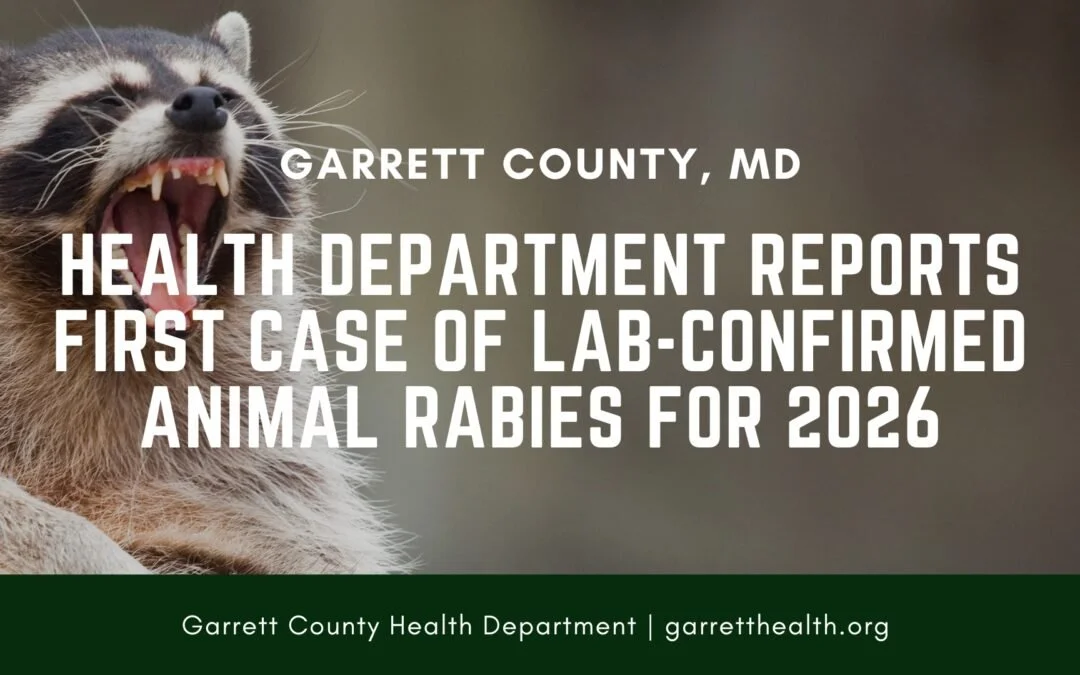
In late August 2026, a mobile petting zoo called Farm Adventures, based in Iredell County, North Carolina, had four baby goats test positive for rabies, most likely after a skunk got into their pen in late July. The zoo had already traveled to public and private events across multiple counties, Iredell, Mecklenburg, Durham, Rowan, Davie, Catawba, and Burke among them, exposing potentially hundreds of people, including children and elderly attendees, before anyone knew the goats were infected.
This one matters for a different reason than Hernando County's cats. It's not a private backyard exposure, it's rabies reaching a lot of people at once through a public event, the kind of thing most attendees would have had no way to see coming. Health officials specifically urged anyone with contact to call right away rather than wait for symptoms, exactly the point already covered in this guide about incubation and why "wait and see" is never the right call after any exposure. Rabies isn't a Florida-specific concern or a rare fluke. It's an active, current threat wherever wildlife and vulnerable animals cross paths, which is most places.
None of that is new. Dog owners, cat owners, and doctors have been fighting this exact threat for well over a century, and knowing that history is part of understanding why today's rules look the way they do.
A (Surprisingly Interesting) History of Fighting Back
Rabies has terrified people for a very long time. Descriptions of "mad dog" bites go back to ancient history, and for most of human history, getting bitten by a rabid animal was basically a death sentence with a countdown clock attached. If the only picture you've got of what rabies actually looks like is Old Yeller, that fear is well placed. A devoted family dog gets bitten while fighting off a rabid wolf. He grows more aggressive and disoriented as the disease progresses. Eventually his boy is the one who has to put him down. The biology in that story holds up. The film came out in 1957, but the story itself is set in Texas in the late 1860s. There was no vaccine yet, for anyone.
In 1885, a French chemist named Louis Pasteur developed the first rabies vaccine. He was working before anyone even knew what a virus was, so no, he didn't have the benefit of a microscope powerful enough to actually see one. Pasteur weakened the virus by drying out infected rabbit spinal cord tissue, over and over, until it was mild enough to trigger the body's defenses without causing the disease itself (Pasteur Institute). His first human patient was a nine-year-old boy named Joseph Meister, bitten fourteen times by a rabid dog. Pasteur started the series of injections two days after the bite, before Meister ever showed a single symptom, using the same logic behind modern post-exposure treatment - get ahead of the virus during the incubation window, while it's still working its way toward the brain, not after. Meister never developed rabies, Pasteur became a household name almost overnight, and the modern fight against rabies began.
Those early vaccines were rough by today's standards - grown in animal nerve tissue, and every so often they'd cause the very disease they were supposed to prevent. There was a second, separate risk too, one that current manufacturers still point to directly - nerve tissue carries extraneous proteins alongside the rabies antigen, and those extra proteins could trigger the body's own immune system to attack its own nervous system, an autoimmune reaction in its own right, not just a failed vaccine. Over the next century, the science kept improving - safer growing methods, then modern lab-purified vaccines, then the inactivated ("killed-virus") and lab-engineered products used today, grown instead on an established cell line specifically to avoid that contamination problem. Those modern products are dramatically safer and contain no live, replicating virus. That means they can't cause rabies infection the way those early nerve-tissue vaccines sometimes did (Developments in Rabies Vaccines, MDPI). That's a different statement from "no adverse reactions ever happen." Rare acute reactions, including neurological ones like tremors, drooling, or agitation, are documented in the veterinary literature, covered in more detail later in this guide, though a reliable dog-specific rate for these particular reactions hasn't been well established. They're an immune reaction to the vaccine, not the virus itself at work, and that distinction matters, rather than assuming modern vaccines are risk-free just because they can't cause the disease. Every dog getting a rabies shot at your local vet clinic today is, in a direct way, benefiting from a chain of science that started with one desperate experiment on a nine-year-old boy in 1885.
Why Rabies Vaccination Is Regulated by Law (Not Just Recommended)
Most vaccines are a private decision between you, your dog, and your vet. Rabies is different because it's a public health issue, not just a personal pet-health issue. An unvaccinated dog isn't only a risk to itself. It's a possible bridge between rabies in wildlife and rabies in people. That's why nearly every U.S. state has some kind of mandatory rabies vaccination law, and why it's the one shot your vet legally can't skip just because you'd rather they didn't. The only lawful way around it is a legitimate medical exemption, meaning your vet believes vaccinating could seriously harm your dog because of its specific health condition, not owner preference.
Florida's Rabies Law, Specifically
Florida Statute §828.30 requires dogs, cats, and ferrets to be vaccinated against rabies once they turn 4 months old. The first booster comes 12 months after that first shot. After that, how often your dog needs another one depends on which specific vaccine your vet uses; the label says either one year or three years, and the law follows that label.
One detail that surprises a lot of owners; the law is clear that a rabies "titer," a blood test that checks how concentrated the rabies antibodies are in your dog's system (more on how this works shortly), doesn't count as proof of vaccination. It can't be used to skip a booster or to satisfy the law after your dog's been exposed to a rabid animal, so don't bother bringing lab results to argue with animal control, they're not the appeals board. There's active advocacy pushing to change that, covered later in this guide.
How This Gets Enforced, and What It Costs
Florida doesn't have anyone checking vaccination records door to door. In practice, the requirement surfaces in three situations - your dog bites a person or another animal and animal control gets involved; your dog ends up impounded or picked up as a stray, where vaccination status gets checked at intake; or you need a health certificate for a sale, boarding, grooming, a show, or travel, all of which require proof.
Simply being unvaccinated is a civil infraction under Florida law, meaning it's handled like a traffic ticket rather than an arrestable crime, and it's enforced and fined at the county or municipal level, so the dollar amount depends on where you live. Here in Hernando County, the ordinance caps the penalty at $500 per violation, the same ceiling most Florida counties use since it matches the state's general civil infraction limit. Neighboring Hillsborough County has a better deal for a first offense specifically - get the dog vaccinated and email proof within 15 days of the citation, and it's resolved with no fine and no court appearance at all, about as close to a coupon for pet ownership as county government gets. Miss that window, or it's a repeat violation, and Hillsborough goes up to the same $500 max. Broward County, down in southeast Florida, keeps it simpler with a flat $300 cap. That's the whole penalty for the paperwork gap by itself, and only for the paperwork gap. That grace period doesn't apply once a bite has happened.
What matters far more than that fine is what happens if that unvaccinated dog is the one involved in a bite or a wildlife exposure, covered in detail right after this. Quarantine kicks in regardless of the fine, and you can't fix your way out of it after the fact the way you can resolve a simple compliance citation. The quarantine consequences for an unvaccinated dog are also dramatically longer than for a vaccinated one, because there's no vaccination record for public health officials to lean on. Next to that, the fine is a footnote. If cost is what's keeping a dog unvaccinated in the first place, financial assistance for veterinary care in Florida exists specifically for situations like this.
Medical Exemptions Exist for a Reason
Florida law includes a documented medical exemption. A licensed vet can put it in writing that vaccinating a specific dog right now would be dangerous for that dog because of age, a health condition, a disability, or another medical reason. That exemption stays in place until the dog's health improves enough for vaccination to make sense again.
This is where a vet has to weigh risk against benefit, and here's how that plays out. A healthy six-year-old hunting Lab who spends weekends out in the woods and a sixteen-year-old, mostly-indoor dog going through chemotherapy are not facing the same odds, and no reasonable vet pretends they are. As dogs get older, their immune systems just don't respond to new threats as sharply as they used to, a lot like how reflexes slow down with age, though the AAHA Canine Vaccination Guidelines note that older dogs usually hang onto the protective "memory" built up from vaccines they got earlier in life. Combine an aging immune system with a fragile medical status, and a vet may reasonably decide that the stress of vaccinating right now is a bigger immediate risk than the dog's practical odds of running into a rabid animal, especially for a dog who rarely leaves a fenced yard. This kind of age- and breed-specific risk assessment matters even more for giant breeds; see our Great Dane Health Guide for what "aging fast" actually looks like in a breed with a shorter lifespan to begin with.
That said, and I want to be very clear about this part; no risk is ever zero. An exemption changes the vaccination requirement. It does not change what happens if that exempt dog ever gets bitten by a raccoon that got into the yard, or if that dog bites someone. I'll walk through exactly what does happen next, because it's the single most important thing for an exempt dog's owner to understand.
What Happens If Your Dog Bites Someone
This is the part clients need to know in a crisis, so let me be specific, and specific to Florida.
If your dog bites a person, the dog gets quarantined for 10 days, no matter what its vaccination status is (Florida DOH-Hillsborough). This part isn't negotiable, and it's the same baseline rule whether your dog is fully up to date, overdue, or medically exempt. Some counties will let you keep the dog quarantined at home if your property is approved and you sign a form taking responsibility; unvaccinated dogs more often get sent to a shelter or vet clinic for that quarantine, at the owner's expense. Vets are specifically told not to vaccinate the dog right before or during that 10-day window, because a normal vaccine reaction could be mistaken for the very first signs of rabies (Rabies Aware, Florida). Sit with that rule for a second, because it says something meaningful - this precaution only makes sense in the first place because vaccine reactions produce physical, observable symptoms, not nothing. The overlap is with vague, nonspecific signs like lethargy or a mild fever, not a claim that reactions look anything like rabies itself up close. But it's a quiet, practical acknowledgment from the same system that requires this vaccine that reactions are significant enough to plan around, which is exactly why this guide takes the numbers, the patterns, and the "what to watch for" sections as seriously as it does, rather than treating side effects as an afterthought. The same basic framework applies when the bite is dog-on-dog rather than dog-on-person; animal control still gets involved, and the biting dog's vaccination status still drives what happens next.
In practice, animal control officers often have some discretion in how this plays out, for either kind of bite, though that discretion has firm limits. Two separate issues can surface once officers are on a property investigating a bite - the biting dog's own status, and the vaccination status of other, unrelated dogs who happen to live there. A dog can be currently vaccinated and still have a paperwork problem; registration can lapse or go unclear when a dog changes hands informally, like moving between an adopter, another household, and back toward a rescue without each transfer being formally logged. Separately, if officers discover other dogs on the same property who aren't up to date on vaccination but had no involvement in the bite, that's typically handled as its own compliance matter. Officers may give the owner a timeframe to get those dogs vaccinated and registered rather than treating it as part of the bite investigation itself. That discretion isn't guaranteed and doesn't determine what happens to the dog that bit someone. A paperwork resolution for uninvolved animals and a decision about the biting dog's fate (up to and including euthanasia, depending on bite severity and other factors) are two different tracks that can land very differently. The process has some administrative flexibility. That flexibility doesn't extend to the bite itself.
If your dog gets bitten or scratched by a high-risk wild animal (a raccoon, bat, fox, skunk, coyote, otter, or bobcat), what happens next depends on documented vaccination status, and current guidance actually splits into three tracks, not two. A currently vaccinated dog gets an immediate booster and a shorter observation period, 45 days in a lot of Florida counties. An overdue dog with documented proof of a prior rabies vaccination gets treated the same way, booster plus 45-day observation, because public health guidance recognizes that overdue isn't the same as never-vaccinated. A dog with no documentation, whether truly never vaccinated or just overdue without proof, faces the harder path: current CDC guidance recommends euthanasia, and if the owner declines, a strict quarantine of 4 months (6 months for ferrets) plus immediate vaccination, a reduction from the 6-month standard used before 2016 (CDC).
Vaccinating a dog after that kind of exposure doesn't automatically shorten the mandatory quarantine, but it isn't necessarily a dead end either. Current CDC guidance allows local health officials to reduce that 4-month quarantine if the dog develops an adequate serologic response, meaning bloodwork after the post-exposure vaccination shows the immune system mounted a strong antibody response. That's discretionary, not guaranteed, and it's still not the same mechanism as human treatment. Human post-exposure treatment isn't just the vaccine. It's the vaccine plus a separate injection called rabies immune globulin, ready-made antibodies given right at the wound that provide immediate protection while the vaccine spends its first week or two building the body's own defenses. That immune globulin is the part doing the early heavy lifting. There's no equivalent product licensed for veterinary use in dogs. Researchers have tested something similar to the full human protocol in dogs experimentally, and it worked, but it was never developed into an approved product, partly because even the human version is expensive and periodically in short supply.
There are two different situations where a blood test can change the outcome, and they're worth keeping separate. If a dog was vaccinated before the exposure but just lacks paperwork proving it, a vet can run a test looking for the fast antibody response that only shows up in a previously vaccinated animal; if that response shows up, the dog gets treated as overdue instead of unvaccinated, and the timeline drops to 45 days. Separately, for a dog that's genuinely being vaccinated for the first time after exposure, local health officials have the discretion to shorten the 4-month quarantine if that vaccination produces a strong enough antibody response on follow-up testing, though this isn't guaranteed and isn't something to count on going in.
If your dog has a medical exemption, none of this changes. The exemption removes the routine vaccination requirement. It does not mean your dog gets treated as vaccinated if there's ever a bite or exposure. This is the single most important thing for an exempt dog's owner to remember; the exemption protects your dog from an unnecessary shot, not from what happens if that dog runs into a rabid animal. Keeping that dog away from wildlife isn't just extra caution, it's doing the job the vaccine currently can't.
Why There's No Rabies Test for a Living Dog
Every owner eventually asks some version of this question, usually pretty frustrated - why does a dog have to be put down to test for rabies? Why can't they just draw blood?
Because rabies is a disease of the nervous system, and testing for it reliably means examining tissue from the brain, specifically a full slice of both the brainstem and the cerebellum, the parts of the brain where the virus shows up most clearly (CDC laboratory guidance). As of the latest CDC guidance, there is no approved test that can confirm or rule out rabies in a living animal. This isn't outdated red tape. It's simply a reflection of where the virus lives in the body, and no blood or saliva test currently comes close to being as reliable.
That's exactly why the 10-day observation period exists for dogs, cats, and ferrets that bite a person. It's a biological fact turned into a legal process, not a bureaucratic default. Rabies virus typically only shows up in an infected animal's saliva shortly before that animal would start showing symptoms. So if a dog that bit someone is still acting completely normal after a full 10 days, that tells everyone involved something meaningful; the dog wasn't carrying the virus in its saliva at the time of the bite. No brain tissue required, no guessing.
This is also where a common point of confusion deserves clearing up. Rabies can take weeks to months to incubate, so how can 10 days possibly be enough? The answer is that the 10-day rule and the incubation period are answering two different questions. The months-long incubation describes how long it takes the virus to travel from the bite site through the nerves to the brain. It doesn't reach the salivary glands, where it would need to be to spread through a bite, until very late in that process, usually within about 10 days of symptoms starting, sometimes just a few days. Once shedding starts, the disease moves fast; symptoms follow, and death typically comes within another week or two. So the person who got bitten isn't asking about the dog's whole incubation timeline. They're asking one specific thing; was the virus in the dog's saliva on the day it bit them. If it was, the dog would have to become visibly, obviously sick well within that 10-day window, because that stage of the disease is compressed and fast-moving. A dog still acting completely normal on day 10 wasn't in that late, contagious stage on the day of the bite. The months-long incubation number matters for a different situation entirely, whether a dog got infected at all after a wildlife encounter, which is exactly why that protocol runs 45 days to several months instead of 10, covered earlier in this guide.
If a Person Gets Bitten - What Treatment Actually Looks Like
Every owner has some inherited mental image of rabies treatment as dozens of painful shots straight into the stomach. That image is decades out of date, and it needs retiring, because it feeds a lot of unnecessary panic in an exposure situation.
Modern treatment for a person who's never been vaccinated before is thorough wound cleaning, one dose of a rabies antibody shot given right around the wound (this gives the person immediate, short-term protection while their own body starts building its own defenses), and then four vaccine doses spread out over two weeks, on days 0, 3, 7, and 14 (CDC guidance). People with weaker immune systems get one extra dose on day 28. People who were already vaccinated ahead of time (vets, wildlife workers, people in higher-risk jobs) only need two follow-up doses, on days 0 and 3, and they skip the antibody shot altogether. It's a manageable, walk-in-and-walk-out kind of medical process today, not the ordeal older generations remember.
Why the Timing of Symptoms Matters So Much
In people, rabies symptoms typically don't show up for weeks to months after exposure, and exactly how long depends on things like where the bite happened and how bad it was (CDC). That combination, a long symptom-free stretch followed by a disease that's essentially always fatal once it does show up, is exactly why public health officials take every possible exposure seriously. It's also exactly why "let's just wait and see if anything happens" is never the right call after a bite from an unknown or high-risk animal. By the time symptoms would tell you something's wrong, the window to do something about it has already closed.
All of that, the law, the quarantine rules, the human treatment protocol, exists because of what's in that syringe your vet gives your dog. So the vaccine itself deserves that same scrutiny: not just that it works, but how long it protects, what's in it, and what happens in the rare case something goes wrong.
That's the rest of this guide. We'll start with the question almost every owner gets asked at the counter and never quite understands: one year or three. From there we'll dig into how long immunity lasts according to the research, why Florida won't accept a titer test as a substitute even though it tells you something meaningful, what's sitting in the syringe, what the honest numbers on reactions look like, and what's proven versus still unsettled about longer-term effects. Here's where to start.
The 1-Year vs. 3-Year Vaccine Question
Most owners don't realize the 1-year and 3-year rabies vaccines are the same shot. When a vet asks "one year or three?" it sounds like a choice between two different vaccines, so that's what people assume it is. It isn't. Here's what's going on, and what the question means.
1-year and 3-year rabies vaccines are built from the exact same formula. Merck's Nobivac line, for example, sells matching 1-year and 3-year versions that are the identical product, no difference beyond what's printed on the label (Nobivac 1-Rabies, Nobivac 3-Rabies). This is the best-documented case in this guide: USDA's own veterinary biologics records list Nobivac 1-Rabies and Nobivac 3-Rabies under the identical product license as Zoetis's Vanguard and Defensor lines, more on that below. Boehringer Ingelheim's IMRAB follows a similar pattern by its own product labeling - IMRAB 3 and IMRAB 1 are both killed-virus rabies vaccines for dogs and cats using the same virus strain and the same described composition, one proven out to three years, one to one, plus thimerosal-free versions of each (IMRAB 3 TF and IMRAB 1TF). PUREVAX, the non-adjuvanted cat vaccine covered later in this guide, comes in matching 1-year and 3-year versions too. The Nobivac/Vanguard/Defensor family is the one where a single shared USDA product license removes any doubt; for IMRAB and PUREVAX, the claim rests on the manufacturers' own product labeling describing identical composition rather than a confirmed shared license number, a real but narrower distinction worth keeping in mind.
The legal duration printed on a rabies vaccine's label comes from a study the manufacturer submitted to the USDA, where vaccinated animals were later exposed to live rabies virus to prove they were still protected at that point in time. Every rabies vaccine company checked for this guide has completed both studies for their formula, one proving protection to one year, one proving it out to three, and sells both labeled versions of the same identical vaccine. Both stay on the market at once because federal approval and local law aren't always the same thing. Some states and counties still legally require annual revaccination regardless of what the vaccine itself is proven to do, so there's a persistent market for the 1-year-labeled version even with the 3-year data already in hand. Your vet has to follow whatever's printed on the label of the specific product they're using, no matter what they personally suspect your dog's immune system is doing.
Asking which brand or manufacturer your vet uses tells you something meaningful about the vaccine itself, whether it's thimerosal-free, which adjuvant it uses, the details covered elsewhere in this guide. Asking whether that specific dose was labeled 1-year or 3-year tells you your dog's legal deadline. Florida law follows whatever's printed on the label of the specific dose your vet used, not the formula behind it. If your vet used the 1-year-labeled version, your dog is legally due for a booster in a year, even if that exact liquid, sold under a 3-year label, wouldn't have required it. So the brand question is about what's in the syringe, and the label question is about which legal clock just started.
In practice, most vets start every dog on the 1-year product for that very first rabies shot, since Florida law already requires a booster 12 months later no matter which product was used initially. There's no upside to using a 3-year label on a dog's first visit when the law is going to bring them back in a year regardless. That 1-year-vs-3-year choice tends to show up at that second visit, once your vet has your dog's vaccination record on file and can move to the 3-year product for boosters going forward. So if your vet's office seems to default to 1-year shots for new patients, that's standard practice working as intended, not a product they're avoiding offering you, and not, as I once halfway suspected, some kind of loyalty program to get you back in the door sooner.
There's also a consistent pricing pattern across clinics, even though the underlying vaccine likely costs the vet about the same either way. Across clinics, the 3-year shot tends to cost more out of pocket than the 1-year shot, and low-cost or walk-in clinics, the county events, the shelter clinics, the retail chains, typically only offer the 1-year product at all. Part of that is practical - a 3-year certificate legally requires proof your dog already had a 1-year shot on record, and a high-volume clinic seeing walk-ins often has no reliable way to verify a stranger's prior vaccine history on the spot, so defaulting to 1-year sidesteps that problem entirely. The higher price for the 3-year version at full-service vets is likely less about the vaccine costing more and more about the convenience being worth pricing for; fewer required visits over your dog's life is a meaningful perk, and a vet can reasonably charge for that even if their own wholesale cost didn't change.
How Long Does Immunity Really Last? The Rabies Challenge Fund
If you've spent any time in the more skeptical corners of the dog world, you've probably run into the claim that "science already proved rabies immunity lasts seven years." That's taking a legitimate, peer-reviewed study and boiling it down. The results are more complicated than that.
The Rabies Challenge Fund exists because of one dog owner's own loss. Kris L. Christine's Labrador, Meadow, developed a tumor at his rabies injection site after a booster shot, and that pushed her to get Maine's rabies law changed and then found the Rabies Challenge Fund itself. Dr. W. Jean Dodds, a well-known holistic veterinarian, came on as co-trustee, and Dr. Ronald Schultz, the veterinary immunologist already mentioned in this guide, joined as the principal investigator running the study.
The Rabies Challenge Fund followed vaccinated beagles for years after their last shot, then exposed them to live, active rabies virus to see who was still protected (study summary, Maine Legislature testimony). The survival numbers -
- 80% survival (4 of 5 dogs) at 6 years, 7 months after their last shot
- 50% survival (6 of 12 dogs) at 7 years, 1 month after their last shot
- 20% survival at 8 years after their last shot
Every single unvaccinated dog used as a comparison died. So the basic idea, that immunity often lasts well beyond the legal three-year window, holds up. But "half the dogs survived at seven years" is not the same thing as "rabies vaccines definitely last seven years," and it's not enough, on its own, to get a 7-year vaccine approved, which is exactly why one doesn't exist in the U.S. yet. What's established - protection often outlasts the label. What's still being worked out - exactly how long, in which dogs, and how to turn that into an approved product. The researchers themselves called this a starting point for more research, not the final word.
The part I find remarkable; when previously vaccinated dogs with low antibody levels got a booster, their immune systems fired back fast and hard, the kind of quick, strong response you'd expect from a body that remembered the threat perfectly well, even though a blood test alone would have made it look unprotected. That finding is the whole reason the next section on titers matters. Some vets who've tracked patient titers over many years report rarely seeing them come back completely undetectable, even in older dogs, a pattern that lines up with what the Challenge Fund data found about immune memory outlasting expectations. That's clinical experience rather than a published dataset, but it points the same direction as the formal research.
Where the Research Stands Right Now
Outside of the Challenge Fund study, the broader scientific consensus is that every USDA-approved rabies vaccine is proven to work for at least three years, and no product has yet been formally proven, to the government's satisfaction, to protect meaningfully longer than that (ScienceInsights). That's as much about money and paperwork as biology. The kind of study needed to prove a longer duration is expensive and slow, and no manufacturer has finished one yet. This is ongoing research, not finished; more on where it might be headed is at the end of this guide, along with a closer look at how that kind of research gets done. In the meantime, there's a legal tool that tries to answer a related question more directly, whether an individual dog is still protected right now, and that's where titers come in.
Titers - What They Measure, and Why Florida Doesn't Accept Them
Titers are a useful tool for making informed decisions about vaccination, including avoiding unnecessary boosters. They're also legally limited in a specific way.
A titer is a blood test that measures how concentrated the antibodies are in your dog's blood at that exact moment. That's useful information, but it's incomplete. AAHA's guidelines point out that having antibodies (or not having many) doesn't necessarily tell you whether that deeper "reserve" immune memory is still there, and nobody has pinned down a specific antibody number for rabies that reliably tells you a dog is protected.
The Rabies Challenge Fund data shows us something counterintuitive. Dogs with low antibody concentrations at the time of the blood test still had a rapid response once given the vaccine booster to fight off the virus, exactly what you would expect from a body that "remembered" how to neutralize the threat, even though a single blood draw wouldn't have shown it.
That raises the obvious question - is there any number of antibodies that present in the titer test that proves immunity? Sort of. Every dog is different, so two dogs vaccinated on the same day can have very different antibody concentrations a year later, let alone five or seven years later. There's no single timeline that applies to every dog equally.
With that in mind, older combined data from several studies gives an idea of what concentration of antibodies may be needed for immunity (data compiled from Bunn, Natural History of Rabies, 1991, as reproduced here). You'll see these numbers written as ratios like 1:20 or 1:40. It's a bit like testing how strong a rope is by seeing how much weight it takes before it snaps in a controlled setting. This weight test limit is ultimately safer than having the rope fail while it's in use, holding weight, with people counting on it. The antibody test works the same way - the lab waters the blood sample down step by step and checks how far they can dilute it before the virus is able to take over. The point where it finally breaks, where dilution wins and the virus gets through, is the number they report. A sample that could be watered down a lot before that happened, like 1:40, started out stronger than one that broke almost right away, like 1:5. So a bigger number means a stronger concentration of antibodies and better protection, the equivalent of a higher weight test before the rope snaps, even though it can look backwards at first glance. Previously vaccinated dogs without a detectable concentration of antibodies (0%) at the moment of rabies virus exposure had roughly a 28% mortality rate, close to 1 in 4. That dropped to 10% mortality at a titer of 1:5 to 1:9. It dropped further to under 1% above a titer of roughly 1:20. It hit effectively 0% above 1:40.
So higher numbers do generally mean more protection. But that pattern comes from small, older studies using different methods rather than one large modern dataset, which is why it's never become an official legal cutoff.
There's also a more advanced blood test, separate from a regular titer, that checks for immune memory directly instead of just measuring antibody concentration. Researchers used it on some of the low-titer dogs in the Challenge Fund study and found most of them did have lasting memory in their immune system, even though their blood antibody concentration looked low. That's an interesting result. But even the researchers who ran that test didn't treat it as the final word. Their next step was to expose those same dogs to the virus, just to check whether the memory test held up against survival. That tells you something important; even a more advanced lab test hasn't fully replaced the live-exposure standard, and it's not something your regular vet can order today anyway.
A Broader Pattern: Trusting the Immune System vs. Working Around It
The titer conversation is part of a bigger pattern, one that shows up in more than just rabies boosters. A lot of general veterinary practice defaults to repeat intervention on a fixed schedule instead of checking what a dog's immune system is actually doing, and that default carries a cost of its own.
Vaccine boosters are the clearest example inside this guide already. For decades, core vaccines, rabies included, were boosted annually as standard practice, not because research had shown immunity faded that fast, but because nobody had funded the long-term studies to check. When AAHA finally updated its canine vaccination guidelines to move toward individualized, three-year-or-longer protocols, the reasoning wasn't new science proving vaccines suddenly last longer. It was old assumptions finally getting tested and found unnecessarily conservative (AAHA). Every unnecessary booster given under the old blanket schedule was another roll of the dice on the reaction numbers already covered earlier in this guide, a real, if small, physiological risk taken for protection the dog's immune system may have already had.
It shows up outside vaccines too. A 2015 American Veterinary Medical Association task force estimated that as much as half of the antibiotics prescribed to pets aren't needed, often for conditions a healthy immune system would clear on its own given time (AVMA task force, via The Nation's Health). That habit isn't free either, unnecessary antibiotic use disrupts a dog's gut microbiome along with whatever it was actually treating. Same instinct as the old booster schedule: treat by default instead of checking what's actually needed first.
None of this makes boosters or antibiotics the enemy. Both save lives when a dog's immune system genuinely needs the help. The problem is treating "when in doubt, intervene" as automatically safe, when for a body that's often already equipped to handle the threat, it's just a different kind of risk than doing nothing. That's the same blind spot at work when a vet dismisses a low rabies titer as "no protection," full stop, instead of understanding what the Challenge Fund data actually showed about immune memory outlasting a blood test's snapshot.
And then there's the legal side. Florida's law is blunt about it; rabies antibodies in your dog's blood cannot be used as a substitute for current vaccination, whether that's for a routine booster or after an exposure. That's not the state ignoring the science, it reflects the fact that no one has nailed down a protective antibody number solid enough to safely replace a legally current vaccine. Getting there would take a rigorous study pinning down that missing number, then getting it through USDA or state-level review; expensive, slow, and nobody's done it yet. And rabies raises the stakes on getting that number wrong in a way most diseases don't. There's no diagnostic test that can confirm or rule out rabies in a living, symptomatic animal, and the disease is close to 100% fatal once symptoms start, so a mistaken titer doesn't just mean a sick dog. It can mean a human exposure nobody caught in time. That's why regulators are unusually unwilling to accept a still-unvalidated test here, even though titers are accepted more freely for other diseases.
The answer for the owner who wants to titer instead of vaccinating is this; a titer tells you something meaningful about your dog's antibody response. It will not get your dog legally out of Florida's rabies requirement, and it will not change how your dog is treated if there's ever a bite or an exposure. "Useful test" and "legal substitute" are two different things, and mixing them up does owners a disservice.
Nosodes Aren't a Legal or Medical Substitute
You may run into a holistic or homeopathic alternative offered instead of vaccination, usually called a nosode, or specifically for rabies, Lyssin. It's a homeopathic preparation traditionally made from diseased material, in Lyssin's case, saliva from a rabid animal, diluted down through repeated rounds until, by homeopathy's own method, essentially none of the original substance remains.
This isn't a legal option, and that's not just my own read on it. Multiple sources within the homeopathic veterinary community itself state plainly that a rabies nosode will not satisfy the legal vaccination requirement. On the evidence side, most of what supports nosodes is anecdotal or uncontrolled. The one legitimate controlled study on nosodes in dogs, for parvovirus rather than rabies, was co-run by Dr. Ronald Schultz, the same researcher already covered in this guide as the Rabies Challenge Fund's principal investigator. His own conclusion was that nosodes "remain an unknown quantity," and he does not recommend relying on them as a sole strategy for disease prevention. For a disease with the stakes rabies carries, close to 100% fatal, no diagnostic test to confirm infection in a living, symptomatic animal, that's not a gap to take a chance on.
That closes out the question of how we know a rabies vaccine still works, and for how long. Before moving on to what's in the syringe, sit with how that duration research gets done, because "survival rate" is a clean, clinical phrase that hides something a lot harder to face.
The Unaccounted Cost of Rabies Research
Proving a vaccine still works years later requires exposing dogs to live, virulent rabies virus and watching to see who lives. The study design is strictly binary - a dog survives a fixed observation period, typically 90 days, or it doesn't. There's no reported middle outcome.
The dogs who survive aren't set free afterward. The Rabies Challenge Fund's own methodology states that brain tissue from every challenged dog was tested for the virus, testing that can only happen after death, so even the dogs who make it through the 90-day window are euthanized afterward to confirm the result. That's the core of what animal-welfare advocates have pushed on, and it deserves to be taken seriously on its own terms rather than waved off as reflexive opposition. Human vaccine research does sometimes deliberately infect volunteers, but only for diseases that are self-limiting or have a reliable rescue treatment available, malaria, typhoid, cholera, and flu all have a history of this kind of controlled human challenge trial. What doesn't happen, in human research at any scale, is deliberately infecting a volunteer with something expected to be fatal and lacking a reliable rescue treatment, exactly the profile rabies has. Europe has also relied on a non-animal, blood-based method for routine vaccine batch testing for years instead of a live-exposure model. A more defensible standard would hold this research to that same restraint: any live exposure should be as selective and purpose-driven as the human model already requires, aimed at learning something that could save lives, not treated as a routine cost of confirming a virus batch is potent enough to validate the trial's own control group.
There's also a regulatory reason a concurrent group of unvaccinated dogs has to go through the same exposure at all - federal rules require that at least 80% of those unvaccinated control animals die from the exposure for a trial to even count as valid, which is the same standard that invalidated one of the Rabies Challenge Fund's own three trials when the virus batch used wasn't potent enough.
Comparing this to how human vaccine research works shows something stark. Human trial participants consent, and they know what risks they're accepting going in. But even with full consent, human challenge trials are ethically limited to diseases that are self-limiting or have a reliable rescue treatment on hand, which is exactly why they exist for malaria, typhoid, cholera, and flu, and don't exist for something with rabies' profile: expected-fatal, no reliable rescue treatment. That's the real line, not "human research never deliberately infects anyone," and it's a harder one for the animal research model to justify crossing than a blanket claim would be.
It's also fair to ask why this data-gathering approach hasn't been tried harder, because there's a credible case for it. Rabies exposures in vaccinated dogs happen on their own in the real world, without anyone manufacturing them, and Florida's own wildlife agency already instructs people to have any wild animal showing signs of rabies dispatched and tested immediately, as standard public safety practice. That means confirmed rabies cases, with known circumstances, have been generated in meaningful volume for decades, entirely as a byproduct of routine wildlife management, completely separate from any research program. Natural exposure data will always carry more variables than a controlled study, unknown viral dose, bite location and severity, exact timing, so it's not a wholesale replacement for challenge studies. But it's a resource that's never been systematically connected to vaccinated pet outcomes, and doing that connecting could meaningfully reduce how many dogs a future study needs to put through deliberate exposure in the first place. That infrastructure was never built, and the current method exists in its place.
There's an irony here too. The entire field started with Pasteur acting decisively on a single, desperate case, a boy who'd already been bitten, not a manufactured exposure built for the sake of research. It worked, and it became the foundation for everything that followed. A field that began by learning from a natural exposure now defaults to creating artificial ones instead of systematically learning from the exposures that were already happening the whole time.
None of that is a reason to look away from what rabies itself does to an unprotected dog, that's the whole reason vaccination exists in the first place. But it's also not something to soften with clinical language. Real dogs, not statistics, are what these numbers are built from, and that deserves to be faced rather than skipped past.
With that said, it's time to look at what's going into your dog on vaccine day.
What's In the Syringe - Mercury, Antibiotics, and "Boosters" in the Vaccine Itself
Three questions about ingredients come up constantly, and all three deserve a straight answer.
The Mercury Question
Thimerosal is a mercury-based preservative that's historically shown up in some vaccines, including some rabies products. I get why "mercury in a shot" sounds alarming out of context, so let's cover why it's there and what it does, not just that it exists.
It was developed back in the 1930s to solve a specific problem - a multi-dose vial gets punctured repeatedly, once per dog, and each puncture is a fresh opportunity for bacteria or fungus to get in. Thimerosal kills that contamination before it can grow, the same reason the guide already covers for why multi-dose rabies vaccine vials use a preservative at all. Without it, a shared vial would be an infection risk for every dog vaccinated from it.
On side effects specifically tied to thimerosal itself, not the vaccine as a whole, the FDA's own review found the main documented issue is local hypersensitivity, essentially an allergic-style reaction right at the injection site, in a small number of individuals. There's an important chemical distinction too. Thimerosal breaks down into ethylmercury, which is not the same compound as methylmercury, the type found in fish and tied to the mercury poisoning concerns most people have heard about. Ethylmercury clears the body faster and hasn't been shown to cause the same neurological harm at the doses used in vaccines. Some lab-dish research has found thimerosal can affect certain immune cells when tested outside a living animal, but that's a different, more preliminary kind of evidence than proven harm in living dogs. For dogs and cats specifically, one veterinary researcher who looked into this directly found essentially no published research on thimerosal causing harm in animals, aside from one study noting it can cause local irritation that complicates the results of a specific kind of allergy test.
Formulas vary by manufacturer. Some older rabies vaccines used thimerosal; plenty of others never did. And importantly, thimerosal-free options aren't rare or hard to find. IMRAB 3 TF is a commercially available three-year rabies vaccine that's specifically marketed as thimerosal-free (Boehringer Ingelheim).
If avoiding thimerosal matters to you, that's a totally reasonable thing to bring up with your vet. You don't have to choose between silently accepting whatever's in the syringe and skipping the vaccine entirely, you can just ask which product they're using.
The Antibiotic Question
Gentamicin shows up alongside thimerosal in the classic Nobivac and Vanguard formula, and it's an ingredient most owners never hear named at all. It's doing the same basic job as thimerosal, killing off contamination in a multi-dose vial, but it targets a different category of bacteria, so manufacturers commonly pair the two preservatives together for broader protection than either one alone would give.
This is where being precise about dose matters, because gentamicin as a prescribed antibiotic, given by injection to treat an infection, carries documented risks, kidney damage and hearing loss are both documented with therapeutic use, especially with repeated or prolonged dosing. That is not the same thing as the trace preservative amount sitting in a single rabies vaccine dose, and I don't have evidence that a one-time preservative-level exposure carries that same organ-toxicity risk. What is directly relevant at vaccine-preservative levels is allergy. Dogs can be hypersensitive to gentamicin and to the broader family of antibiotics it belongs to, called aminoglycosides, and that cross-reactivity is well documented, meaning a dog with a known reaction to a related antibiotic could plausibly react to this too. That's exactly the kind of history to tell your vet before a vaccine, not just before a prescription.
Adjuvants - What They Do and Why They're There
An adjuvant is basically a booster ingredient added to a vaccine to make the immune system pay more attention. Think of it like a megaphone - it doesn't change the message (the rabies target the vaccine is teaching the body to recognize), it just makes sure the body's defenses notice it loud and clear, so they respond faster and stronger. This means the vaccine can often work with a smaller dose than it would need otherwise. The most common adjuvant in veterinary vaccines, including a lot of rabies products, is a form of aluminum that's been used in vaccines since the 1920s (HogenEsch, Frontiers in Immunology). It works by holding the vaccine at the injection site a bit longer and switching on the immune system's "alarm" cells, giving the body a clearer signal to respond to (Merck Veterinary Manual).
Adjuvants are also part of the injection-site tumor conversation in cats, which I'll get to below, and it's exactly why that's a much bigger deal for one species than the other.
Acute Reactions - The Numbers
This is the section where vaccine articles usually pick a side - either pretending nothing bad ever happens or making it sound like a coin flip. Let's just look at the data.
The most frequently cited study followed over 1.2 million vaccinated dogs and found 4,678 reactions within three days of vaccination, which works out to roughly 38 out of every 10,000 dogs vaccinated (Moore et al., JAVMA 2005). A bigger, more recent study of nearly 5 million dogs found that number had dropped to about 18-19 per 10,000 visits, which researchers think reflects better vaccine manufacturing over the years since (Moore et al., JAVMA 2023). A Canadian survey found a similar pattern of mostly mild, short-lived reactions (things like soreness, low energy, or a mild fever) being far more common than anything serious (Valli, Can Vet J 2015).
True anaphylaxis (the rare, can't-breathe, full-body kind of reaction) is where a study that looked at rabies vaccine specifically, instead of vaccines in general, helps. A 15-year Japanese government surveillance study found an anaphylaxis rate of about 0.15 per 100,000 vaccinated dogs, which is rare. The harder number to sit with; of the dogs who did have a true anaphylactic reaction, roughly two-thirds died from it (Yoshida et al., J Vet Med Sci 2021). That's not a reason to be afraid of the vaccine. It's a reason your vet asks you to stick around the clinic for a few minutes after your dog's shot, since true anaphylaxis shows up fast, usually within the first hour, and is very treatable if caught immediately.
The original Moore 2005 dataset was also used separately to check whether reactions cluster in specific places and times more than chance would predict, across 257,564 dogs in 13 US metro areas. A cluster did turn up, centered on Atlanta over a four-month stretch in the winter of 2002 into 2003, 20 reactions among 702 dogs at a rate unlikely to be random. The researchers dug into why, and it wasn't the dogs themselves. Age, sex, neuter status, and weight didn't differ between the affected dogs and everyone else. What did stand out - just 2 of the 21 clinics in the area accounted for 60% of the cases, a pattern strong enough that a more targeted analysis of those two clinics specifically came back clearly significant. The researchers point to vaccine administration technique or clinic personnel as the more likely explanation, while noting a significant limitation in their own data, they had no way to track which vaccine lot each dog received, so a specific bad batch couldn't be ruled out either, only that it couldn't be tested directly (Moore et al., Vaccine 2005). That's a useful reminder either way - when reactions cluster, the cause is more often something happening at a specific place, a technique, a batch, than something wrong with the vaccine as a whole.
A few patterns show up in the data -
- Most reactions are mild and short-lived - soreness, low energy, a mild fever, loss of appetite for a day. A smaller number of dogs have neurological-type signs, including tremors, drooling, or agitation, and rarely something more serious like a seizure. Reports of these exist in both human and veterinary vaccine safety surveillance data. But causation isn't proven here; reviewers looking at this data generally haven't found a consistent pattern connecting the timing or type of symptom to the vaccine itself, which means the reports are credible but don't add up to a proven, predictable side effect the way "soreness at the injection site" does.
- Small dogs react more often than big dogs. It's not a small gap either. Dogs under about 11 pounds show a noticeably higher reaction rate, and researchers think it's because every dog gets the same amount of vaccine regardless of size, not because small dogs are inherently more fragile.
- Young adult dogs reacted more than puppies in the original 2005 study, dogs roughly 1-3 years old were at higher risk than dogs 2-9 months old.
- Getting several vaccines in one visit raises the odds of a reaction. Each additional shot at the same appointment measurably increased the chance of a reaction, by about 25% with each vaccine added, up to four. This next number is easy to misread, so slow down here - the odds ratios below are a comparison between vaccines, not a percentage of dogs having a reaction. Think of it like two rare weather events. If Tornado A happens 39% more often than Tornado B, that doesn't mean tornadoes are suddenly common. Both are still rare, one just happens a bit more than the other. Remember the overall reaction rate here is still well under 1% of vaccinated dogs. Within that small group, rabies vaccine had the highest adjusted odds of any of the six vaccines studied (39% higher odds overall), just ahead of the core combo vaccine, distemper/parvo/adenovirus (31% higher). Looking specifically at the more serious moderate-to-severe reactions rather than everything lumped together, rabies and the combo vaccine were essentially tied at the top, 81% and 76% higher odds respectively. Bordetella and the canine flu vaccine carried close to no elevated risk at all, the lowest of any vaccine in the study. Bordetella is also the only one given as a nasal mist instead of an injection, which researchers think plays a role (Moore et al., JAVMA 2023).
- Breed matters, and for a few breeds it matters a lot. The same study broke down reaction odds by breed, compared to mixed-breed dogs as the baseline. Three breeds stood out sharply - French Bulldogs (over 4 times the odds), Dachshunds (also over 4 times), and Boston Terriers (nearly 3.7 times). On the other end, Golden Retrievers, Labrador Retrievers, and German Shepherds all had lower odds than the mixed-breed average. The study only tracked "rabies vaccine" as a category, not which specific brand or manufacturer each dog received, so this breed pattern applies across the vaccine type generally, not to one particular product.
- A smaller dose is not the fix. This one surprises people; giving a small dog a reduced amount of rabies vaccine to try to lower reaction risk isn't backed by evidence that it works, and it's against the label, which can also put you out of compliance with the law requiring the vaccine be given exactly as labeled.
What I tell clients: if you've got a small dog, or one with a reaction history, ask your vet about spreading rabies out from your dog's other vaccines instead of doing everything in one visit. That's a backed-by-evidence way to lower risk. Asking for a smaller dose isn't.
Long-Term Effects - What's Proven, What's Possible, and What's Just Bad Timing
This is the section I refuse to write sloppily, because it's exactly where trust gets broken in both directions; owners get told nothing bad ever happens, or they get told every illness their dog develops later traces back to a needle.
What's established - adverse reactions tied to vaccines happen, get reported, and get studied, including some that involve the immune system attacking the body's own cells. One frequently cited study looked at dogs diagnosed with an immune disorder called IMHA (basically, the immune system mistakenly destroying the dog's own red blood cells) and found a notable share had gotten sick within a month of being vaccinated (Moore & HogenEsch, Vet Clin North Am Small Anim Pract 2010; see also Day, J Comp Pathol 2006).
What's still unsettled - later studies trying to confirm that same pattern didn't consistently find it. And here's the key distinction; timing alone doesn't prove cause. A dog vaccinated on a Tuesday and diagnosed with an unrelated illness on a Friday doesn't tell you which one caused the other, or whether either one did. Two events happening close together in time is a clue, not proof by itself.
What I won't do - hand you a tidy, confident answer that the veterinary research doesn't have. If an article tells you with total certainty that vaccines definitely cause a specific chronic illness, or definitely don't, be skeptical of the certainty, not necessarily the question itself. The answer sits in a messier middle - "these two things happened close together," "this seems biologically possible," and "this has been proven to cause that" are three very different levels of evidence, and a lot of what circulates online blurs all three into one scary-sounding claim.
Behavioral Changes - A Reported Experience Without Established Proof
Some owners and some vets, more often ones with a holistic focus, report dogs becoming more aggressive, anxious, or otherwise different in temperament following a rabies vaccine. This deserves to be documented rather than automatically dismissed, since it's a common thing owners bring up.
Where this stands as evidence - I could not find a credible, peer-reviewed study establishing that rabies vaccination causes lasting aggression or an anxiety disorder in dogs. What exists is anecdotal reporting, owners and vets noticing a change and connecting it to a recent vaccine. Take that seriously as an observation, and mention it to your vet if you notice it in your own dog, but it's not the same as a proven cause, and a lot of what's written about it online leans on raw, unverified adverse-event report counts, often drawn from within the holistic veterinary community, rather than controlled research that's directly tested the claim. There's also a timing confound - routine vaccination age often overlaps with a dog's natural adolescent development, including fear periods and shifts in temperament that happen with zero vaccine involvement at all, which makes a true behavioral change and a coincidental one hard to tell apart from an owner's seat. If you do notice a sudden change in your dog after a vaccine, mention it to your vet and rule out pain or an unrelated medical cause first, rather than assuming either way.
"No proven cause" isn't the same as "not real," and that distinction matters. This is an area that needs more research, not one that's been settled and closed. Published research tends to lag behind what people working hands-on with dogs notice, and that gap is a limitation of the research, not proof the observation is wrong. Anyone who's spent years training and handling dogs knows that firsthand experience regularly gets out ahead of what's been formally studied yet.
Tumors at the Injection Site - A Cat Problem That Gets Mislabeled a Dog Problem
If you've heard that vaccines cause tumors where the needle goes in, you're thinking of cats, and even then, the story deserves more nuance than it usually gets online.
This kind of tumor in cats, called an injection-site sarcoma, is a well-documented, well-studied problem, and there's active, ongoing debate among researchers about how much of the risk comes from the adjuvant booster ingredient specifically versus just the body's inflammation response to getting a shot at all (WSAVA). One informal, self-described "unscientific" email survey of 108 vets in 2005 found 17 had never diagnosed one of these tumors, but the group collectively had seen more than 400, and rabies was named as the suspected cause more often than any other feline vaccine (dvm360). That's practitioner-reported experience, not a rigorous study, and it's entirely about cats, the other two vaccines named alongside rabies in that survey are feline-only vaccines. In dogs, the evidence isn't close to comparable. There are a handful of individual case reports, one involved an older Labrador who developed a tumor at a spot where he'd recently gotten several vaccines, but even the vets who wrote up that case were careful to say the timing doesn't prove the vaccine caused it. If you've got both a cat and a dog at home, don't let the cat's documented risk make you nervous about the dog.
New Rabies Vaccine Research and What's Available Now
The science behind rabies vaccines has kept moving since Pasteur's era, here's what's available today versus what's still on the drawing board.
A newer style of vaccine already exists commercially for cats - PUREVAX Feline Rabies. Instead of using a killed rabies virus plus an adjuvant booster, it uses a different, harmless virus as a kind of delivery truck, engineered to carry just one small piece of the rabies virus into the body. That's enough to teach the immune system what to watch for, without needing an adjuvant to get its attention (Boehringer Ingelheim). That technology used to be cat-only, but that's changed. Interestingly, researchers used the feline version, off-label, on some dogs in the Rabies Challenge Fund study, specifically because none of the study dogs had ever been exposed to it before, which let researchers cleanly measure a true immune-memory response.
More recently, a new option has reached the market for dogs too. Merck launched a product called Nobivac NXT, which works in a completely different way than any adjuvanted vaccine. Instead of injecting a killed virus plus a booster ingredient, it delivers a small set of genetic instructions that gets a dog's own cells to briefly produce one piece of the rabies virus themselves, teaching the immune system to recognize it without any adjuvant at all. It's approved for both dogs and cats, with a 3-year duration. So the "no adjuvant available for dogs" gap that used to exist isn't there anymore. Worth flagging before it causes confusion later in this guide: USDA classifies Nobivac NXT specifically as a "Rabies Vaccine, RNA Particle," a self-amplifying RNA platform, not the same technology as the mRNA vaccine covered further down in the future-research section. Related family of ideas, different platform, different stage of development; Nobivac NXT is licensed and on the market today, the mRNA version discussed later is still in early animal testing.
The Brands You'll Run Into, and What's In Each One
Given how many names show up on a vet's shelf, here's what sets them apart and what doesn't, without the technical detail getting in the way.
Nobivac (1-Rabies and 3-Rabies), Vanguard (Rabies 1 Year and 3 Year), and the older name Defensor are, for practical purposes, the same vaccine. This isn't an inference, USDA's own veterinary biologics records confirm it directly: Nobivac 1-Rabies, Nobivac 3-Rabies, Defensor, Defensor 1, and Defensor 3 are all listed as trade names under one single USDA product license, held by Zoetis Inc. (Establishment 190, product code 190524, "Rabies Vaccine, Killed Virus"), with Nobivac marketed through Intervet Inc., a Merck Animal Health subsidiary (USDA APHIS product summary, full studies summary, PDF). Same virus strain, same adjuvant, same basic recipe, one federal license covering all five names. Picking one brand over another here isn't picking a different product, it's a little like ordering a burger under three different restaurant names that all turn out to share the same kitchen. Confirmed ingredients, straight from the product's own label - killed rabies virus grown in cell culture, a "highly purified adjuvant" (the label doesn't name which one specifically), and two preservatives named directly, thimerosal (mercury-based) and gentamicin (an antibiotic).
IMRAB, made by Boehringer Ingelheim, is a separate formula from the Nobivac/Vanguard family, built the same general way (killed virus plus adjuvant) but from a different manufacturer's own process, using the original Pasteur strain. The full IMRAB lineup mirrors Nobivac's pattern closely - IMRAB 3 (3-year, dogs/cats/sheep) and IMRAB 1 (1-year, dogs/cats) are both standard formulas containing thimerosal, while IMRAB 3 TF and IMRAB 1TF are the thimerosal-free versions of each.
Nobivac NXT is the newest option, for both dogs and cats. It uses RNA particle technology instead of a killed virus, and it's adjuvant-free, thimerosal-free, and preservative-free entirely, nothing added beyond the active component.
PUREVAX Rabies, also made by Boehringer Ingelheim, is currently cat-only. It uses a different non-adjuvanted technology (a harmless virus used as a delivery method) and doesn't appear to contain thimerosal.
The Ingredient Most Owners Have Never Heard Of
Beyond the adjuvant and the preservatives already covered in this guide, there's a third category, and it's the one with the least transparency. The virus in these vaccines is grown in a lab using a nutrient broth that typically includes fetal calf serum, and the finished vaccine can carry tiny leftover amounts of cow-derived proteins as a manufacturing byproduct, not an intended ingredient. Legitimate, peer-reviewed research in beagles found that vaccination with an adjuvanted rabies vaccine caused some dogs to develop immune reactivity to these leftover proteins, and a separate study of dogs who'd had an allergic reaction after vaccination found most of them tested positive for reactivity to this same source. Having the reactivity show up doesn't mean a dog will react, most dogs who develop it stay completely healthy, but among dogs who do react, this appears to be a common underlying cause.
Here's the limitation, and it matters for what you can do about it - manufacturers aren't required to disclose this on the label, because it's a byproduct, not the intended active ingredient. Unlike thimerosal, which you can look up brand by brand, there's no public source confirming which specific products carry more or less of this residue. My own view, and I'll say plainly this is my opinion rather than settled policy - this is exactly the kind of ingredient that should be disclosed the same way thimerosal already is, especially for a dog with a known beef or bovine sensitivity, or any other known ingredient allergy, including to an antibiotic like gentamicin. An owner can currently ask their vet which brand is being used and whether it's thimerosal-free, but there's no equivalent question they can ask to find out about this one, and that's a meaningful gap, not a small one.
The gap isn't limited to obscure manufacturing byproducts. Even the full, basic ingredient label for a widely used product like Nobivac or Vanguard sits behind a professional veterinary login, not something a regular pet owner can just look up the way you'd check a human medication's insert. That's the reason this guide can only confirm three ingredients by name, the adjuvant, thimerosal, and gentamicin, instead of a complete list. The information exists. It's just routed somewhere the person injecting it into their dog can't reach.
What the Side Effect Information Shows, and What It Doesn't
Here's a limitation I need to be upfront about. Every study on vaccine reactions used in this guide, the ones showing overall reaction rates and the small-dog and multi-vaccine patterns, tracked "rabies vaccine" as one lumped-together category. None of them broke results down by which specific brand or technology a dog received. So I can't hand you a sourced number like "IMRAB causes X% fewer reactions than Nobivac," because that comparison hasn't been published anywhere I could find.
What each product's own safety paperwork lists is mostly the same standard language across all of them - possible pain or swelling at the injection site, lethargy, and in rare cases a full allergic reaction requiring treatment with epinephrine. That's true whether the product is adjuvanted or not, since even a non-adjuvanted vaccine can still trigger an allergic reaction in a sensitive individual dog.
My opinion, and I want to be clear this is reasoning rather than a proven finding - the non-adjuvanted options, Nobivac NXT for dogs and PUREVAX for cats, have a plausible edge on paper, since removing the adjuvant removes one known source of local inflammation and, in cats specifically, a documented tumor risk tied to adjuvants. Boehringer Ingelheim backs that confidence with money, not just marketing copy - they offer a tiered guarantee covering diagnostic and treatment costs, up to $5,000, if a cat vaccinated exclusively with PUREVAX is ever diagnosed with an injection-site sarcoma. Putting cash behind a safety claim is a stronger signal than an ad alone, but it's still a mechanistic argument plus a manufacturer's confidence, not an independent track record. These are newer products without the decades of large-scale surveillance data behind the older adjuvanted vaccines. A brand-new product with a good theoretical safety profile and a two-year track record isn't automatically safer in practice than an older one with millions of documented doses behind it. It's a tradeoff between plausible biology and proven history, and I don't think the evidence currently lets anyone declare a clear winner.
Beyond that, researchers are actively working toward longer-duration studies that could eventually support a licensed 5- or 7-year rabies vaccine for dogs, building on the kind of data the Challenge Fund produced. Nothing's cleared approval yet, but the direction is clear, and it's one of the more promising things to watch over the next several years.
That's everything going into the shot itself. Zoom out from the syringe for a second, because the rules around rabies vaccination don't stop at your own county line, they follow your dog anywhere it travels.
International Travel Requirements
If your dog is traveling internationally, especially to a country still considered high-risk for dog-to-dog rabies spread, the paperwork rules are strict, and they can't be fixed after the fact. The official rabies vaccination certificate has to be filled out by a USDA-approved vet before your dog leaves the country. It can't be issued once you've already landed back home, no matter how solid your dog's vaccine records are (USDA/CDC instructions). Customs agents are famously unmoved by "I meant to get to it." If international travel with your dog is in your future, start that paperwork before you book anything else.
Countries That Have Gotten Rid of Dog-to-Dog Rabies
The United States wiped out the dog-specific strain of rabies back in 2007 (CDC), a public health milestone. Western Europe, Canada, Japan, and a number of Latin American countries have done the same (WHO). Mexico was the first country in the world to get official recognition from the World Health Organization for eliminating dog-to-human rabies spread, back in 2019, after decades of a sustained, nationwide vaccination push (PAHO/WHO).
Here's the nuance most casual "rabies-free countries" lists skip over; getting rid of the dog-specific version of rabies is not the same as getting rid of rabies, period. The U.S. is a perfect example; dog-to-dog rabies is gone, but the virus is alive and well in raccoons, bats, skunks, and foxes. Worldwide, rabies still kills an estimated 59,000 people a year, and about 95% of those cases happen in Asia and Africa, almost entirely from dog bites in places where mass dog vaccination hasn't yet reached the level needed to stamp it out (WHO).
The core strategy for eliminating dog-to-dog rabies is mass dog vaccination - vaccinating at least 70% of a country's dog population every single year without gaps, until the virus runs out of new hosts to spread to. This is the exact method already responsible for every country on this list, and it takes sustained investment. Wildlife is a separate problem with a separate tool - oral rabies vaccine baits, dropped by plane in rural areas and left in bait stations elsewhere, that raccoons, foxes, coyotes, and skunks eat and absorb through the mouth. The U.S. has run these programs since the early 2000s, eliminating the dog-coyote rabies variant entirely by 2008 and holding a containment line against raccoon rabies from Maine to Alabama today. Europe's version of this, targeting red foxes specifically since 1978 across 24 countries, is considered one of the most successful wildlife disease elimination efforts in history. But one major reservoir sits outside this entire system - bats. No country has a working vaccination program for wild bat populations, since the bait-based method that works for ground animals doesn't translate to a species that flies and roosts. That's not a hypothetical gap. Jeanna Giese, covered earlier in this guide, was bitten by exactly the kind of animal no current program can reach.
There's a third strategy too, and it's completely different from the other two - prevent it from ever arriving in the first place. Hawaii is the only U.S. state that's ever been completely rabies-free, not just dog-variant-free, no documented case at all, in any species. It got there through geographic isolation combined with strict border control rather than any vaccination campaign, a quarantine program dating back to 1912, requiring imported pets to have two rabies vaccinations at least 30 days apart, a titer test, and either a waiting period or a quarantine of up to 120 days before entry. Paradise, it turns out, has a very strict guest list. Because there's no rabies on the islands to protect against, Hawaii's own resident pets aren't legally required to be vaccinated for rabies at all, the opposite of the requirement covered earlier in this guide for every other state. New Zealand, Iceland, and parts of Australia use this same island-isolation strategy.
That's the big picture. Bring it back down to your own dog's next appointment, because here's how to put all of this to use.
Questions To Ask Your Veterinarian
You don't need to walk into an appointment with a stack of printouts. You just need a few good questions to turn a routine vaccine visit into a two-way conversation -
- Which specific rabies vaccine are you using, and is it labeled for one year or three?
- Is this one thimerosal-free, and does that matter to me as an owner?
- Given my dog's size, age, and health history, is there a good reason to space rabies out from other vaccines today instead of doing them all at once?
- Does my dog have any personal history of vaccine reactions I should know about before today?
- If my dog has had a mild reaction before, would a dose of an antihistamine like Benadryl beforehand make sense? Some vets do this as standard practice for dogs with a reaction history, though the documented benefit of this specific practice hasn't been well established in research, it's common, not proven.
- Can the vaccine be warmed in hand for a minute before it's given? The stinging some dogs feel at the injection is often just from the vaccine being cold straight out of the fridge, not the vaccine itself, and some vets find warming it first makes the shot more comfortable.
- If my dog is older or dealing with a health issue, how are you weighing the risk of vaccinating against my dog's practical chances of running into a rabid animal?
- If we ever looked into a medical exemption, what would that involve for my dog, and what would it change, and not change, legally?
Every one of those questions has a specific answer. A good vet will be glad you asked.
Where the Science (and the Law) Might Be Headed
A few things are in motion right now, but none of it is settled yet -
A longer-lasting vaccine. Building on Rabies Challenge Fund-style research, there's active interest in eventually getting a rabies vaccine approved for longer than three years. That would take a manufacturer funding and finishing a formal study that meets federal standards - expensive and slow, and nobody's finished one yet, but it's a live possibility, not a dead end.
A totally different kind of rabies vaccine, still years from your vet's office. Researchers in China recently tested an early version of an mRNA rabies vaccine, the same basic technology behind the COVID shots, in dogs, mice, and monkeys. Instead of injecting a piece of killed virus, it gives the body a temporary set of instructions telling cells how to build one small rabies protein themselves, and the immune system then learns to recognize that. One result stood out - dogs that had already been infected with a lethal dose of live rabies virus survived just as well with two doses of this new vaccine as other dogs did with five doses of a standard vaccine. That's a promising result.
It's also nowhere close to being something you can ask your vet for, and not just because the research is new. This kind of vaccine has to be kept extremely cold, often somewhere between -20 and -90 degrees Fahrenheit, all the way from the factory to the needle, which is a logistical headache for a small-town vet clinic compared to a standard rabies vaccine that just needs a regular refrigerator. There's also a documented downside from its more widely used cousin - the same mRNA technology used in human COVID vaccines has been linked to a rare, mostly mild and short-lived heart inflammation in a small number of people, mostly young men, working out to roughly 1 to 4 cases per 100,000 vaccinated. That's not something this specific rabies study found in its own dog or monkey testing, but it's a legitimate mark against the broader technology. This is animal testing only, done by one research team, with no human safety data for this particular vaccine yet and no path to approval mapped out. This kind of research exists and looks promising. Just don't expect it anytime soon.
Vets making more individualized calls, not just following the label. This isn't just an abstract preference, it's the thread running through several things already covered in this guide. A vet who doesn't understand the gap between antibody concentration and the deeper immune memory a titer can't see might tell a client a low titer means no protection, when the Challenge Fund data shows that's often wrong. A vet weighing a medical exemption for an older or medically fragile dog needs to understand immunosenescence, not just follow a blanket rule, to make that risk-benefit call correctly. A vet who knows about the leftover growth-medium proteins covered earlier in this guide can connect a dog's reaction history to a specific cause and make an informed brand recommendation, instead of shrugging at an unexplained allergic reaction. None of this is theoretical - AAHA's own guidelines, already cited throughout this guide, are built around this exact principle, individualized risk assessment instead of a one-size-fits-all protocol. My own opinion is that closing that knowledge gap matters as much as any single law or policy change, since a policy only works as well as the vet applying it understands the reasoning behind it.
A push to let titers count. Research from veterinary immunologist Dr. Ronald Schultz has fed an active advocacy movement, most visibly Dr. John Robb's "Protect the Pets" campaign, arguing that titer tests should eventually count as a legal alternative to automatic revaccination. Here's exactly where that stands; Connecticut, Robb's home state, introduced a bill in 2016-2017 (H.B. 5659) that would have made it the first state in the country to allow titers in place of revaccination. It never passed, and Connecticut's rabies law today still doesn't recognize titers as a substitute, same as everywhere else. Delaware is the outlier. In 2020, it passed and signed into law Maggie's Pet Vaccine Protection Act, which explicitly writes titers into its rabies statute, but only as a tool a vet can use to help decide on a medical exemption for a specific sick or fragile dog, not as a general substitute for a healthy dog's booster. Eighteen states have some form of medical exemption law, and titers commonly play that same supporting role informally in several of them. What's still true everywhere, Delaware included, is that a titer alone has never been recognized anywhere as a legal stand-in for current vaccination.
There's a sharper, more instructive part of this story too. Robb didn't just advocate; he acted on his titer and dosing beliefs directly, giving smaller dogs reduced doses of rabies vaccine without following the labeled protocol. Connecticut's veterinary board found he'd violated state law, and in 2017 placed his license on 25-year probation with a full ban on administering rabies vaccines for that entire period. He appealed. Connecticut's appellate court upheld the sanction in 2021. That's the current consequence for a licensed vet who deviates from the labeled protocol on this basis, whatever the underlying science eventually turns out to support.
Changes to the law itself. Rabies vaccination rules come from state and often county government, which means they can and do change over time. If any of this matters enough to you that you'd like to see a different rule (titers being accepted, longer default intervals, broader exemptions), the place to push for that is your state or local government, not your next vet visit.
Better use of the exposure data we already have. This one connects back to the research-ethics questions raised earlier in this guide. Decades of routine wildlife rabies surveillance and vaccinated pet exposure outcomes already exist as two separate records nobody has systematically linked together. Connecting them, along with continuing to validate non-lethal correlates of protection like the deeper immune-memory tests covered in the titer section, wouldn't eliminate the need for controlled challenge studies, but it could meaningfully reduce how many dogs any future study needs to put through deliberate exposure. That's not a fringe animal-welfare talking point; it's a real, achievable research-policy direction, and one that doesn't require choosing between protecting dogs and proving vaccines work.
Where That Leaves You
Rabies vaccination isn't something to sign off on without a second thought, and it isn't something to be suspicious of. It's an effective tool, built on more than a century of steadily improving science, used against a disease that's close to 100% fatal once symptoms start and almost entirely preventable before that. Reactions do happen. Understand them, watch for them, and talk them through with your vet, especially if you've got a small dog or one with a reaction history. Titers give you meaningful, useful information, but they don't get you out of Florida's legal requirement. Medical exemptions are legitimate and available for the dog that needs one, but they don't erase the risk that dog carries if it's ever exposed to a rabid animal.
None of that calls for blind trust, and none of it calls for fear. It just calls for understanding how the whole thing works - the biology, the law, and the reasoning behind both. If you've made it this far, you do. That's exactly the kind of owner who has the best conversation with their vet, and the best outcome for their dog.
More Florida Pet Safety Resources
This guide is part of a growing library of Florida-specific dog care resources on our site. If this was useful, these cover related ground -
- Florida Toxic Plant Guide for Dogs - the other everyday Florida hazard most owners haven't fully mapped out
- Great Dane Health Guide - breed-specific health information, including how aging and medical risk factor into decisions like this one
- Financial Assistance for Veterinary Treatment in Florida - resources if cost is a barrier to keeping any vaccination or vet visit current
If a vaccine reaction, a behavior change, or anything else in this guide has you wanting a second set of eyes on your own dog, in-home training in Hernando County and remote coaching nationwide are both available - request a consultation any time.
Vocabulary, In Plain English
A cheat sheet for the terms scattered through this guide, in case you skipped ahead or just want a quick refresher without rereading the whole thing.
Adjuvant - An added ingredient that makes a vaccine's immune response stronger, so the vaccine can work with a smaller dose of the actual virus material. Think megaphone, not message.
Aminoglycoside - The family of antibiotics gentamicin belongs to. Matters mainly if your dog has reacted to a related antibiotic before, since a reaction to one can mean a reaction to others in the same family.
Anaphylaxis - The rare, severe, whole-body allergic reaction, the "can't breathe, needs immediate treatment" kind. Not the same thing as a sore leg or a mild fever, which are far more common and far less serious.
Antibody / antibody concentration - The proteins your dog's immune system builds after vaccination to recognize and fight off the rabies virus if it ever shows up for real. A titer measures how many of these are currently in the blood.
IMHA (immune-mediated hemolytic anemia) - A disorder where the immune system mistakenly attacks the dog's own red blood cells. One of the conditions researchers have studied for a possible, unproven link to vaccine timing.
Immunosenescence - The gradual, normal decline in how sharply the immune system responds to new threats as a dog ages. Part of why vets weigh vaccination differently for senior dogs.
Incubation period - The stretch of time between exposure to the virus and the first symptoms showing up. For rabies, this can run anywhere from days to months, depending on where the bite happened.
Injection-site sarcoma - A tumor that can form where a vaccine was injected, well-documented in cats, rare and poorly documented in dogs.
Killed-virus vaccine - A vaccine made from rabies virus that's been deliberately inactivated so it can't cause infection, but still teaches the immune system to recognize the real thing. Most rabies vaccines work this way.
Medical exemption - A vet's written documentation that a specific dog shouldn't be vaccinated right now due to age, illness, or another medical reason. Changes the vaccination requirement, not what happens if that dog is ever exposed to rabies.
mRNA vaccine - A newer vaccine technology that gives the body temporary instructions to build one small piece of the virus itself, teaching the immune system to recognize it without injecting any virus material at all. Same basic tech behind the COVID vaccines; still experimental for rabies. Not the same platform as Nobivac NXT, which USDA classifies as an RNA-particle vaccine, a related but distinct, already-licensed technology.
Nosode - A homeopathic preparation, traditionally made from diseased material and diluted down repeatedly, offered by some as an alternative to vaccination. Not a legal substitute in any state.
Post-exposure prophylaxis (PEP) - The treatment given after a person has already been exposed to rabies, wound cleaning, an antibody shot, and a series of vaccine doses, aimed at stopping the virus before it reaches the brain.
Quarantine - The mandatory observation period for a dog after it bites someone or is exposed to a rabid or potentially rabid animal. Length depends on the situation and the dog's vaccination status.
Rabies immune globulin - A shot of ready-made antibodies given to a person right after a bite, providing immediate protection while the vaccine series builds the body's own longer-term defense. No equivalent product is licensed for dogs.
Thimerosal - A mercury-based preservative used in some (not all) rabies vaccines to prevent contamination in multi-dose vials. Breaks down into ethylmercury, not the type of mercury linked to fish-related poisoning concerns.
Titer - A blood test measuring the concentration of rabies antibodies in your dog's blood at a given moment. Useful information, not a legal substitute for current vaccination in Florida or anywhere else.
Tags - rabies vaccine, dog vaccination, Florida pet law, vaccine safety, dog health, rabies titers, medical exemptions, Hernando County, dog bite law, senior dog health