
The Biggest Puppy Training Mistakes
The Biggest Puppy Training Mistakes That Create Adult Behavior Problems
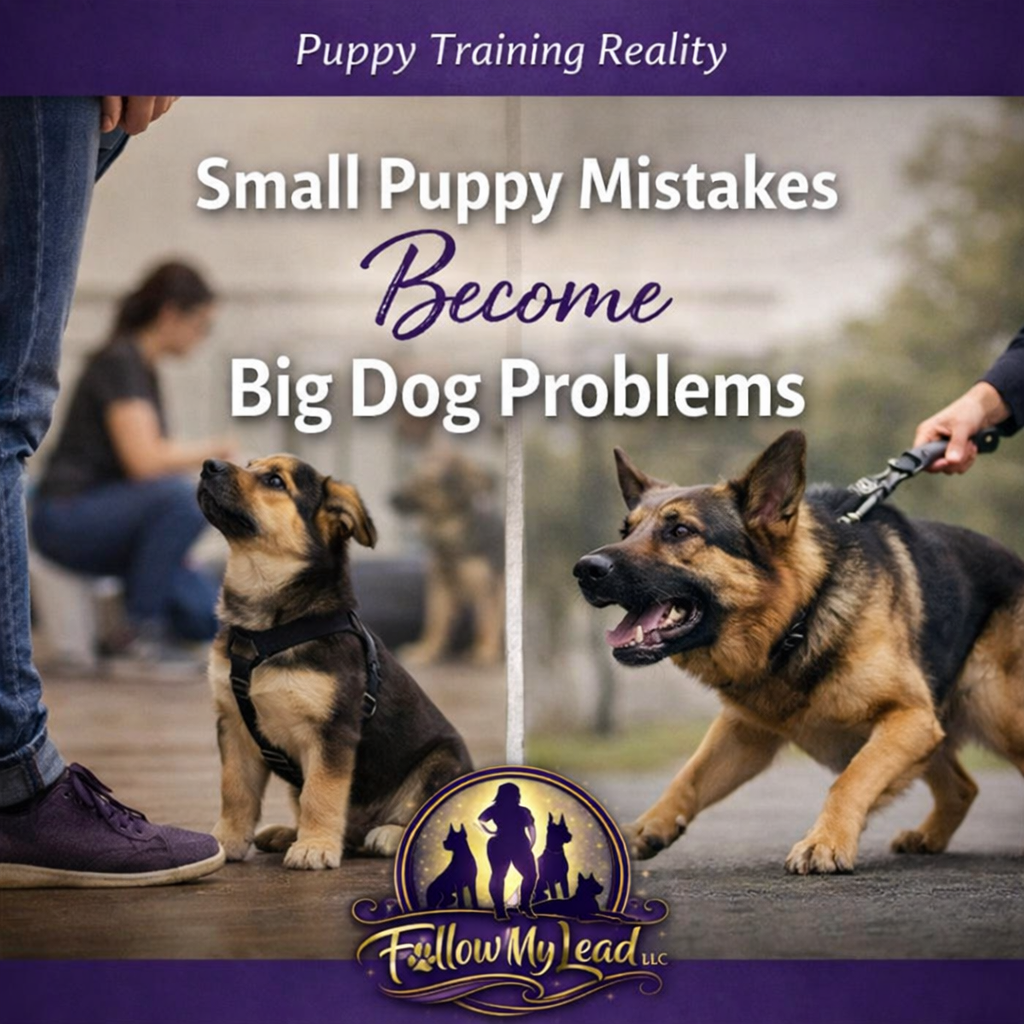
Most behavior problems don’t “suddenly appear” in adult dogs.
They’re built quietly — unintentionally — during puppyhood.
Puppies aren’t born knowing how to live in a human world. They learn through repetition, timing, and the feedback we give them (whether we realize it or not). When those lessons are unclear, inconsistent, or emotionally charged, small puppy behaviors can snowball into serious adult issues.
Here are the most common puppy training mistakes that I see turn into long-term behavior problems later on — and what to do instead.
1. Allowing Behaviors “Because They’re Cute”
Jumping, mouthing, barking, pulling — they’re often brushed off because “they’re just a puppy.”
But dogs don’t grow out of behaviors.
They grow into them.
If a puppy learns:
Jumping gets attention
Mouthing gets playtime
Barking gets a response
Those behaviors become habits long before the dog is physically mature.
What to do instead:
Train the behavior you want from day one. Calm greetings, four-on-the-floor, appropriate chew outlets, and impulse control exercises go a long way.
2. Inconsistent Rules Across People and Environments
Puppies are incredible pattern learners — but only when the pattern is clear.
When:
One person allows jumping, another doesn’t
Furniture rules change daily
Commands mean different things to different people
…the puppy doesn’t learn flexibility. They learn confusion.
Confusion leads to frustration, and frustration often shows up later as:
“Stubbornness”
Selective listening
Reactivity
What to do instead:
Set household rules early and make sure everyone follows them consistently — including visitors when possible.
3. Over-Socializing Without Teaching Neutrality
Socialization is often misunderstood as “let my puppy meet everyone and everything.”
The problem?
Constant excitement without structure teaches puppies that:
Dogs = overstimulation
People = emotional explosions
The environment controls their behavior
This can later look like reactivity, leash frustration, or anxiety when they can’t access what they want.
What to do instead:
Teach your puppy how to exist calmly around the world. Neutral exposure, observation, and engagement with the handler are just as important as play.
4. Relying on Treats Without Teaching Follow-Through
Food is a great training tool — until it becomes a bribe.
When puppies only respond if they see food, owners often say:
“They know it… they just won’t do it.”
What’s really happening is the dog never learned that commands apply all the time, not just during snack sessions.
What to do instead:
Use food strategically, then fade it responsibly. Build value in the behavior itself and reinforce clarity, not constant payment.
5. Avoiding Structure Because It Feels “Mean”
Crates, boundaries, enforced rest, and routine are often avoided out of guilt.
But a lack of structure doesn’t create freedom — it creates anxiety.
Many adult dogs with:
Separation anxiety
Inability to settle
Constant demand behaviors
were puppies who never learned how to be calm or independent.
What to do instead:
Teach rest. Teach boundaries. Structure builds confidence, not fear.
6. Correcting Emotion Instead of Teaching Skills
Punishing fear, excitement, or frustration doesn’t remove the emotion — it just suppresses communication.
This often results in:
Shutdown behavior
Escalation later
Dogs who “snap without warning”
What to do instead:
Address the cause of the behavior. Teach coping skills, emotional regulation, and clear alternatives instead of reacting to symptoms.
7. Waiting Too Long to Get Help
One of the most common phrases trainers hear is:
“We thought they’d grow out of it.”
Early intervention is everything. Puppies are learning machines — and small adjustments early can prevent years of struggle later.
What to do instead:
Get guidance early, even if the behavior seems minor. Training is easier when habits are still forming.
Final Thoughts
Good puppy training isn’t about perfection.
It’s about clarity, consistency, and understanding how dogs learn.
Most adult behavior problems aren’t the result of “bad dogs” or “bad owners” — they’re the result of missed information during critical developmental stages.
The good news?
When you understand what went wrong, you can fix what comes next.
Most dog behavior problems don’t require “more training.”
They require better guidance at the right time.
If you’re raising a puppy and want to prevent these issues—or you already see early warning signs—professional coaching can make all the difference.
This is exactly what I help clients with through personalized training and remote coaching, designed to meet you and your dog where you are—no guesswork, no overwhelm.